I am fortunate enough to be writing about my ancestors’ story from almost 100 years ago. This short story is going to be about me trying to hypothesize how my ancestors lived, what jobs they had, the difficulties they faced as immigrants, and their attempt to stabilize their lives. I am only hypothesizing this story since I do not have any definite records of the past besides small memorabilia and a few short stories I’ve been told by my father. One piece of memorabilia I have is a WW1 artillery shell that is engraved with the following messages: “World’s War”, “Thomas to Margare”, and “France Aug 1918”. These engravings must have symbolized the importance and ending of the war in 1918. In August 1918, The battle of Amiens was a crucial victory won on the Western Front and marked the stunning achievement that changed the course of the War. This crucial victory was The names – “Thomas to Margare” – are my great grandparents. Thomas is the one who served as an Italian soldier during the First World War, while Margare was his wife. After arriving in America, the soldier and wife were transformed into potato farmers. Thus, finding this object was the start of the rekindling of my curiosity as to what their life could have been like in the United States after they moved.
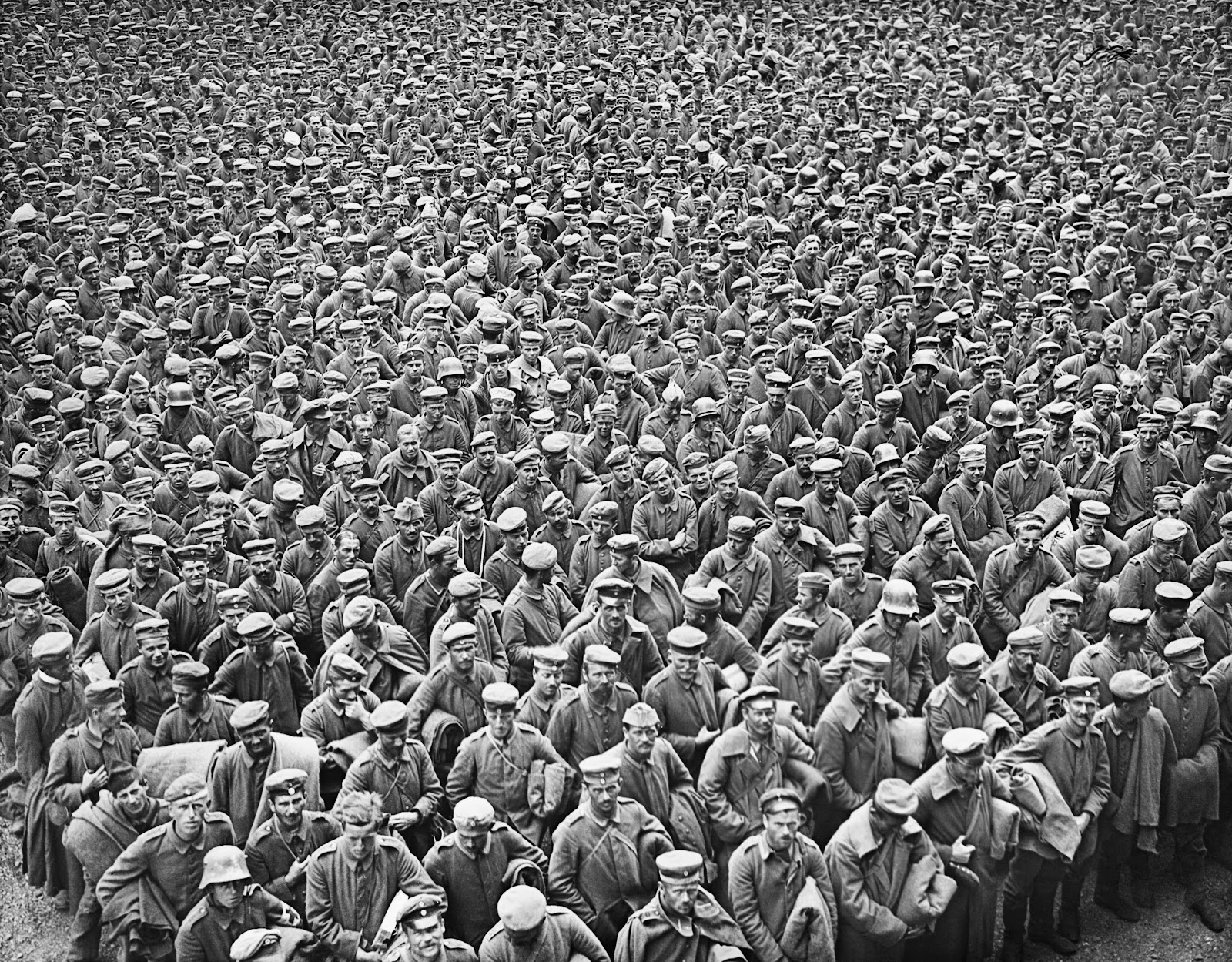
Arriving in America around 1935, my Italian ancestors sought to find purpose in their lives after their harsh life as a soldier fighting against the Central Powers. After my great-grandfather’s harsh life as a soldier and not having a clue as to what they should pursue as a career, he decided to move to California during the creation of the Works Progress Administration. This administration aimed to battle the rates of unemployment across America during The Great Depression; however, finding a job would prove to be much more difficult than they originally thought. This was because Italians, specifically darker Italians such as Southern Italians, were classified as “non-white” and their status was similar to a pariah; thus, employers preferred to hire white people and ignore darker-skinned Italians. Furthermore, the depression upset the immigration laws so forcibly that the California legislature deported thousands of Mexican farm workers to make jobs more available. Learning of this recent mass deportation, my ancestors sought to get a job as a farmer since it was most readily available and they were in desperate need of a job.
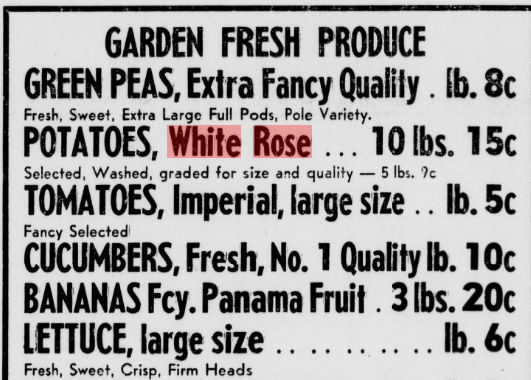
Coincidentally, new advances in genetic breeding were underway and began the rise of production, quantity, and quality of potatoes in California. These genetic breeding advances could have been the cause of larger yields in California’s Kern County. One genetic breeding advance that quickly rose in popularity was the Irish potato nicknamed “White Rose”. This tuber’s scientific name is “Solanum tuberosum” and originated in New York in 1893, where it was bred from a variety of Jackson potatoes using a true seed ball by Rachel Chapman. The “White Rose” tuber is available year-round; however, its peak seasons are in the late spring and throughout early summer. This tuber is still commonly sold year-round to this day and is commonly marketed as a type of California new potato that is sold alongside other potatoes, such as Yukon Golds, Norkotah Russets, and Round Reds. The “White Rose” potato can be harvested young, when its flavor is at its peak, and is considered one of the most prized potatoes of California. In one article, these types of potatoes were being sold for 10 lbs for $0.15.
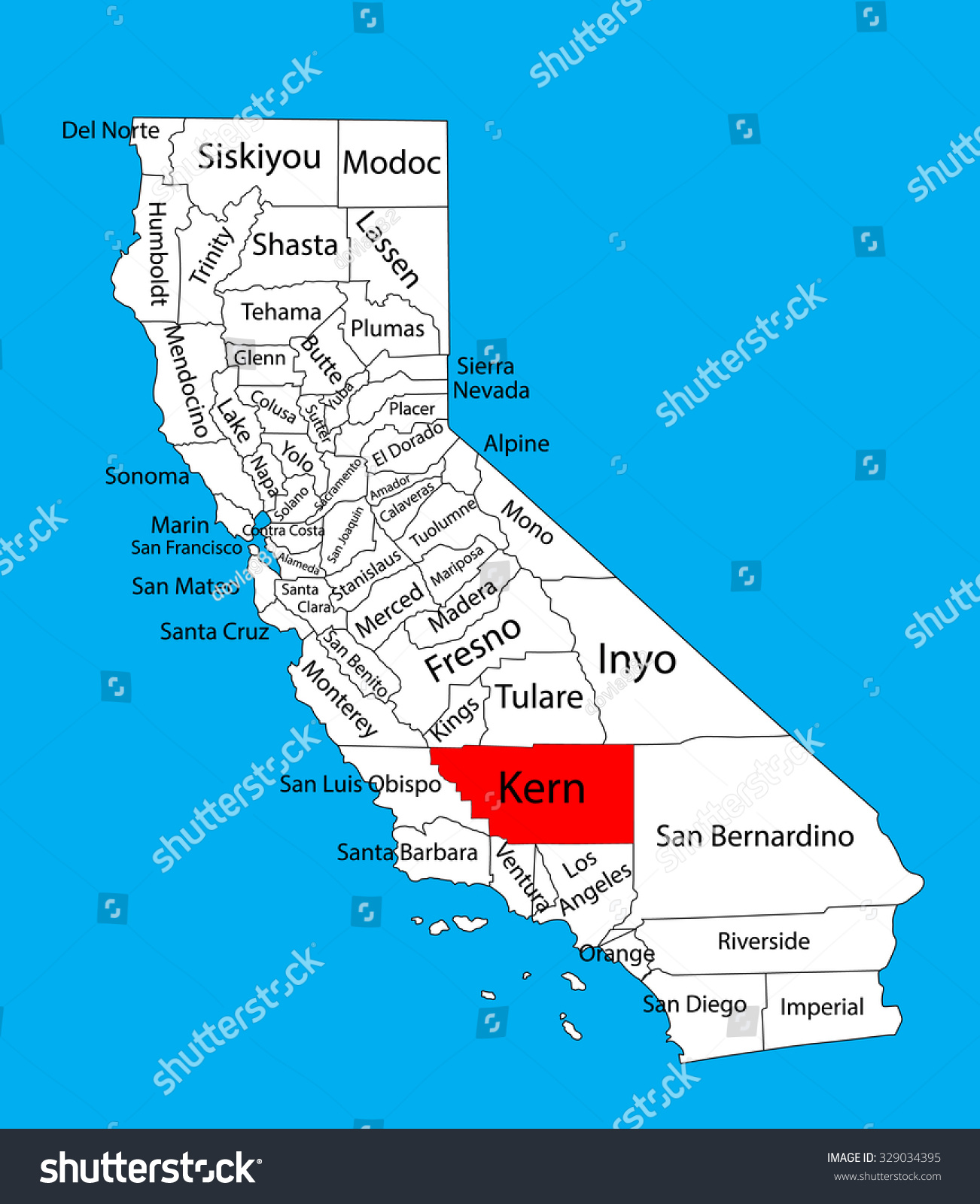
After finding out about the heyday crop, “White Rose” potatoes, that were being grown in Kern County, California, my ancestors wanted to be a part of this to stabilize their difficult immigrant life. Luckily for them, the farming industry was just starting to boom in many regions of California because of the fertile land and urgent need for farm workers. Thus, it was simple to find suitable work with stable pay in Kern, which is close to Merced California. In Kern, my great-grandfather and great-grandmother both worked tirelessly as full-time laborers on one of the country’s most prosperous potato farms. My ancestors mostly worked throughout the spring and summer months because of the peak harvest time for fresh potatoes. These seasons caused a steady need for workers to occupy positions on the farm to maintain constant production. Since the potato boom was in full swing, many farming industries needed as many workers as possible during the harvest season; thus, they employed anyone and almost everyone they could. These people ranged from high school students to elderly farmers. To further add, this freshness was maintained during transportation because of the innovation of the refrigerator. This freshness was very important for consumers for the same reason it is today – the fruit or vegetable’s nutrients are at their peak.
Since the spring and summer seasons were most plentiful for a variety of crops, such as tubers, farmers would try to employ people to harvest crops on their lands. Furthermore, California potato yields were often higher than the potato yields seen across the United States but not as much as North Eastern states. Since California had to compete against industry giant states, farmers in California had to find a new staple crop to stay in the game. Ever since the start of the 19th century, farmers have attempted to create new varieties of potatoes to improve their flavor, and texture, and to lessen their susceptibility to pests and insects. These newly bred potatoes led to an increase in production for California, specifically in Kern County. Combining the urge for competition, experimental plant breeding techniques, and rich land used for farming, it was only a matter of time until California farmers caught up with their competition. This rise in competition would only benefit working families that desperately need jobs, such as my great-grandparents; however, my grandparents had a social impediment placed upon them which limited their options.
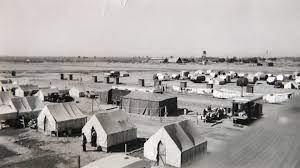
Eventually, my great-grandparents moved outside of Kern County and settled in Merced County, they had to have stayed in the migratory camps in Kern County. Since Kern County had a large workforce composed of mostly immigrants who were in desperate need of a job, my ancestors must have stayed in the migratory camps. These migratory camps had horrendous living conditions to the point in which the police, medical, housing, and welfare services were overstretched to the limit. Many of them had tried to bring national attention to these harsh farm systems and their inescapable situations. Despite their efforts to unionize, their undertaking was squashed and ignored by the local authorities. These conditions continued until the start of the Second World War, which brought about assimilation into a more equal American society.
In addition to the poor living conditions, unfair pay, and limited rights, social status was forced upon them. The “non-white” social status that was imprinted upon them was nothing short of a social curse. This curse would create many difficulties in finding jobs that did not consist of manual labor or a high turnover rate. However, this social status brought about unexpected benefits that allowed my ancestors to find loopholes in the curse that was forcefully put upon them. This unfavorable social status meant that during the main harvest seasons, they were able to get jobs that desperately needed workers and were apathetic towards someone’s racial or ethnic background. However, during the other seasons, it was difficult to find other seasonal jobs to keep their heads above the economic water. Despite their original thoughts of the amazing opportunities one could find in America, immigrants and women, especially, had a very difficult time finding proper wages and equality in the workplace. Women, in particular, must’ve found more job opportunities in production. The opportunities for women were extremely rare even if you were a white natural-born American. If a woman did get a job opportunity, they would face constant harassment and unequal wages. Thus, having both of my ancestors work on the potato farms was a true blessing and they finally found the opportunity they sought in America.
This short story is only a small glimpse of the total American history behind one immigrant family’s story of the trials and tribulations immigrants had to endure for a new life. Every story is vastly different, yet one fact remains the same. The fact is that this story led to the reason why we are standing here, why we are remembering the sacrifice and courage it took to endure the American struggle. This story was of an immigrant Italian fighting through the World War, seeking a greener pasture, and finding the resolve to continue to establish their future. By chance, the potato industry was discovering new genetic breeding which led to an increase in productivity and quality of potatoes in California. The “White Rose ” gave life to my family and was the evidence of their struggle. This struggle was not in vain; instead, it was to find the quality of life they were promised in America. and how they were lucky enough to find a loophole from their social status of being“non-white”. Surprisingly, the potato industry and the determination to find a job caused my ancestors to continue their lineage. Eventually bringing me into this world.
Citations:
- Humanities, National Endowment for the. “Imperial Valley Press. (El Centro, Calif.) 1907-Current, May 15, 1941, Image 8.” Chroniclingamerica.loc.gov, 15 May 1941, p. 8, chroniclingamerica.loc.gov/lccn/sn92070146/1941-05-15/ed-1/seq-8/#date1=1938&index=0&rows=20&words=rose+Rose+white+White&searchType=basic&sequence=0&state=California&date2=1963&proxtext=white+rose&y=0&x=0&dateFilterType=yearRange&page=1. Accessed 4 Dec. 2023.
- Lazicki, Patricia, et al. Potato Production in California.
- cornershop. “5 Cool Facts about Seed Balls.” Student Conservation Association, 10 July 2017, http://www.thesca.org/connect/blog/5-cool-facts-about-seed-balls/#:~:text=It. Accessed 4 Dec. 2023.
- “GSU Library Research Guides: Southern Labor Archives: Work N’ Progress – Lessons and Stories: Part IV: Labor, the Depression, the New Deal, and WWII.” Gsu.edu, 2019, research.library.gsu.edu/c.php?g=115684&p=752252.
- Imperial War Museums. “Amiens 1918: Victory on the Somme.” Imperial War Museums, http://www.iwm.org.uk/history/amiens-1918-victory-on-the-somme.
- “The Dust Bowl, California, and the Politics of Hard Times | California State Capitol Museum.” State of California Capitol Museum , capitolmuseum.ca.gov/exhibits/the-dust-bowl-california-and-the-politics-of-hard-times/.
- “White Rose Potatoes.” Specialtyproduce.com, specialtyproduce.com/produce/White_Rose_Potatoes_2016.php.
- “Kern County California United States America Stock Vector (Royalty Free) 329034395.” Shutterstock, http://www.shutterstock.com/image-vector/kern-county-california-united-states-america-329034395. Accessed 12 Dec. 2023.

