In the research for this paper, it must be noted that the histories of cooking among African Americans and the recipes attributed to the community in modernity are only easily traceable once the twentieth century begins. Especially in the case of the recipes lost to the history of black liberation, fortunately, like the many black Americans seeking to reclaim these recipes, this essay intends that these recipes that were lost are explored, more specifically in the case of the Southern teacake. This recipe has been apparent to generations of working-class black families, including my very own. The original Southern Teacake is proof of knowledge many African Americans had to learn through the improvisation required from a working-class background, passed down from generations of slavery where African Americans were allotted the scraps from their masters, basing their meals on imagination and struggle. Of course, this improvisation was not only limited to slavery, but towards the turn of the nineteenth century, the North still delegated southern black people to the bottom of the class system, limiting resources to the black community post The Great Migration, carrying on to the twentieth century where Southern black dining will be criticized for its use of the antiquated ingredients of their ancestors. In the grand scope of the Southern Teacake, there’s a story of the struggle between the black working class and the early formations of the black, educated middle class, assimilation, and the rediscovered black identity that can be seen through the preservation of this humble cookie.
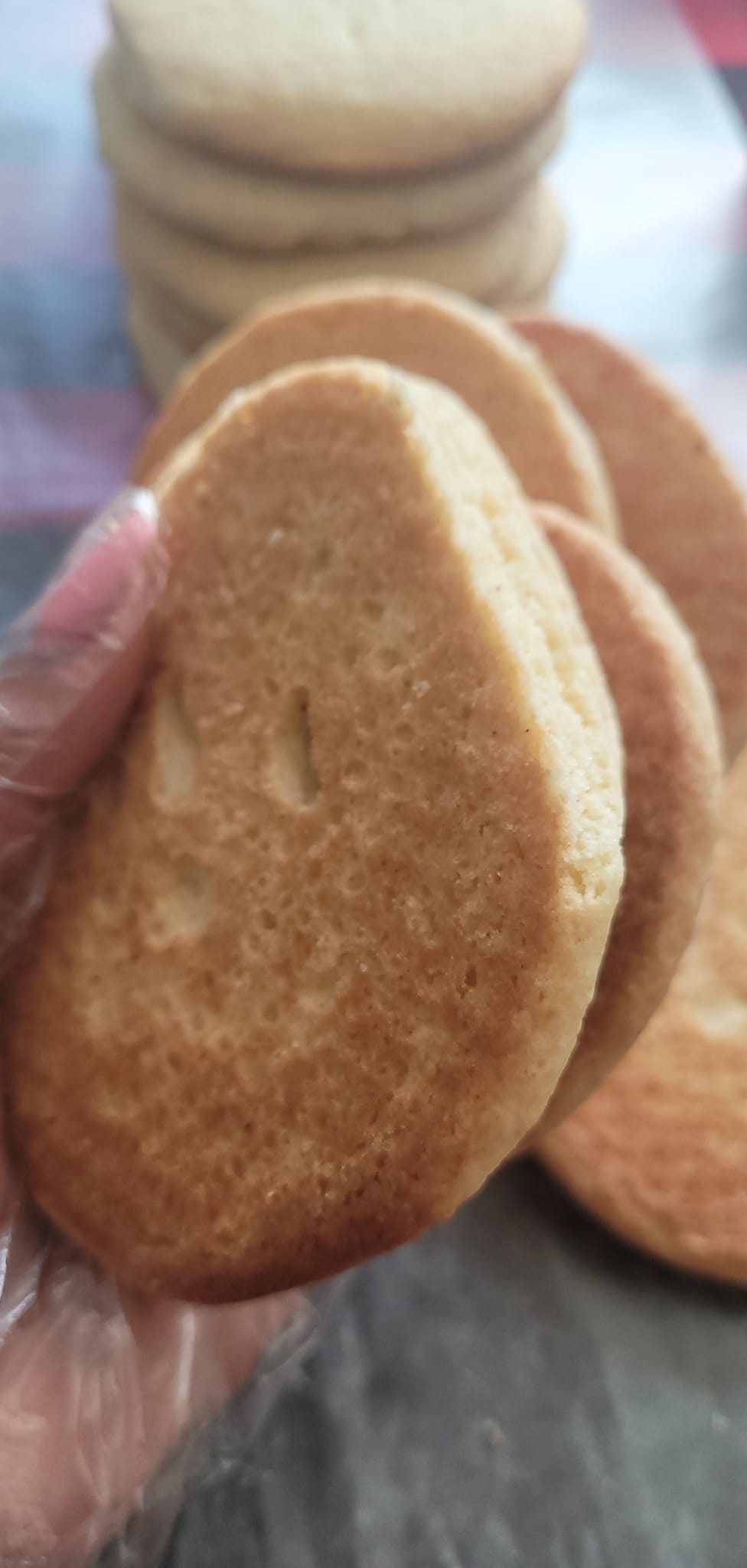
What marks the origins of this humble cookie is traced back to the displacement of African Americans in the South in the seventeenth century, where the Antebellum South so televised for its ruffle-heavy fashions and American pride, depended on the many black cooks growing out of the population. Before the humble teacake as previously mentioned, there was the “European teacake” (Bates) which was not a cookie at all, but instead, a cupcake served by White women to guests of her parlor with tea, unlike the black Americans who would adopt this recipe and use lard and molasses, “a fundamental element of the southern black working-class diet” (Wallach) that will later be discussed, to replace the expensive sugar and butter that would only be available in the “Big House.”(Twitty) Thus, the “Southern Teacake” would be simplified, beneficial not only for its caloric intake (the diets of African Americans in the seventeenth and eighteenth century varied and never guaranteed) but also easy to survive after events where resources would be low for slave and master, such as the fallout after the food shortage following the Civil War or economic struggle of the Great Depression. The ingredients, like flour, baking powder, and vanilla would rarely be used or substituted as African Americans were only allotted “six pounds of meat and five pounds of flour… not enough to ‘last a dog a day”(Wallach). Other ingredients, were stolen to gain access to better meals. While the teacake also appears in the first celebrations of Juneteenth among the recently freed African Americans as early as 1865, however, the chain reaction set by this knowledge of cooking gained through the tumultuous time of slavery in the American South and carried into the twentieth century is where focus should be shifted.
Like many recipes attributed to black culture, southern teacakes were a product of the working class of black Americans, a “taste of necessity.” (Hall). At the start of the Great Migration in 1910, the distinction between Southerners and the emerging middle class of Black Americans to the North was the determining factor for the permanence of these southern recipes, like teacakes, stemming from slavery. On the one hand, the growing middle class, like the notable shift in Chicago from two percent of African Americans to the community representing “a third of the total population” (Wallach) were attempting to assimilate, as slavery had already previously established notable stereotypes of black Americans, and due to the negative connotations of the South, this growing class wished to separate themselves from the culture responsible for the nightmare of slavery, hence the disregard for the Southern diet. On the other hand, as of 1910, approximately 90% of black Americans still resided in the South, with 73% still living in rural areas, followed by in 1920 where “85% of African Americans still lived in the South, largely in rural areas, concentrated in the agriculture sector.” (Wallach) However, the middle class in large urban areas like Chicago would see lucrative opportunities in “food-related businesses” (Wallach) like restaurants and grocery stores, and the industrialization of American food supply allowing for better access to higher priced ingredients like beef, “store-bought breakfast,” (Wallach) cereal, and cocoa as opposed to the fat and starch-rich diets of the working class in the South, having a taste of living “high on the hog.” In a twist of irony, this middle class, in the population’s attempt to assimilate and inspire anxiety about the arriving southerners coming after the already “scarce resources” (Wallach) offered to the black community, this class criticized ingredients part of the Southern working-class diet as a symbolic way of privilege. Ingredients such as sweet potatoes, greens, and yams (traces back to the crop cultivated in the moist woodlands and savanna of West Africa; Hall) cornbread, pork, and corn, ingredients being the “core of the diet on most plantations” (Hall) of the south in the nineteenth century, hence their relevance in the diet of working-class African Americans in as recent as the twentieth century. It is also important to point out that these black southerners that arrived during The Great Migration would later be coined as the “carriers and ambassadors of southern foodways,”(Hall) bringing the Southern teacake with them, but regarded as unlike the high culture of urban cities, labeling this class uncouth and “acting like pigs,” (Wallach) though largely of these educated, northern middle-class individuals were born outside of the South. This class divide was directed by food, as the anxiety perpetuated by the newly formed black middle class, “seeking escape through assimilation” (Bowser), saw the consumption of the giblets of the hog or the fried and starch of soul food as an embarrassment as this was the food of the Antebellum South, pre Civil War and representative of a terrible time in history to the black middle class. Ironically, this class used the stereotypes already perpetuated by white Americans to speak about the working-class diet.
Despite this, the working class residing in the metropolitan areas of the North reserved recipes as it was a matter of survival and nostalgia. The teacake, is a piece of nostalgia for the black working class generations, as observing in the preparation of the antiquated recipes is in itself a memorialized experience like in the case of famed chef Edna Lewis, coined as “The South’s Julia Child,” here recipes included her recipe for the Southern Teacake derives from close observation of previous generations in the chef’s family that went through The Great Migration, The Great Depression and Civil Rights Movement. Going from the dangerous and sweltering heat of hearth stoves to the small urban and rural kitchens of the working class, the teacake is simple, affordable, and a taste of home, it’s attributed to “Soul Food,” the “intellectual invention and property of African Americans,” as it’s influence, like most soul food is outsourced to another region, teacakes, sourced from the United Kingdom and adopted by the African Americans of the Antebellum South. It is also important to note that being those teacakes were made in the small kitchens of the rural south, black farmers were sourcing ingredients like the required two eggs, buttermilk, and four cups of all-purpose flour by their hand until the Great Depression in the mid-twentieth century where they begin to outsource for their ingredients, despite the threat of aggressive racism and prejudice. Ironically, the division in class that disregarded the calorie-heavy, unhealthiness of soul food began to dispel around the Great Depression, as popular black voices like W.E.B DuBois and Ella Baker were encouraging “internal cooperation” (Wallach) among the black community, as resources in food preparation were skim and racial violence was still a grave threat. In an ironic twist the simple, easily attained southern recipes were beginning to take a foothold where corn became an important crop once again due to the emergence of World War I, salt pork utilized as a spice for greens and vegetables, the culture of the black community was reconciling itself through food once again, reclaiming the diet of the working class. It was even in the interest of my great-grandmother, Emily Gunner, referred to as “Momo” who carried the Teacake recipe through the Great Depression herself, using a rusty flour sifter and bowls conveniently acquired from the cafeterias of the hospital where she was employed.
It is in the interest of more modern chefs like Edna Lewis or Michael W. Twitty to rediscover the complexities of southern cooking beyond the health risk, beyond the racist connotations associated with the food. As Twitty remarks, “Many take for granted their fast and easy connections to a food narrative that grounds them in tradition, gives them a broad palette to explore, and affords them genuine taste…” It was even in the research of this paper that teacake recipes varied, some asking for Mexican vanilla extract, while others simply only asking for nutmeg and quite a large helping of butter. This variety is the evidence of generational secrets passed down, reclaimed as the black community must reclaim the lost culture that came from survival, either through assimilation or through the lost stories of our ancestors. My great-grandmother, my grandmother, my mom, and I share a memory with a teacake, the delicious, the subpar, and the plain disgusting of the recipes. It was through a grasp for an identity within the black community that these recipes have been allowed to resurge, despite the class division, we have managed to preserve the little culinary culture allotted to the community. It will be interesting to see what we manage to create in the twenty-first century to pass down to generations to come.
Works Cited
Bates, Karen Grigsby. “Food to Celebrate Freedom: Tea Cakes for Juneteenth!” NPR, NPR, 19 June 2016, http://www.npr.org/sections/codeswitch/2016/06/19/482509752/food-to-celebrate-freedom-tea-cakes-for-juneteenth#:~:text=Karen%20Grigsby%20Bates-,%22Supposedly%2C%20tea%20cakes%20were%20made%20about%20200%20years%20ago.,butter%2C%22%20says%20Etha%20Robinson.&text=%22So%20basically%2C%22%20she%20continues,sugar%20cookie%20recipe%2C%20with%20spices.
Bowser, Benjamin P. The Black Middle Class: Social Mobility—and Vulnerability. Lynne Rienner Publishers, 2007. EBSCOhost, search.ebscohost.com/login.aspx?direct=true&db=nlebk&AN=552037&site=eds-live&scope=site.
Hall, Robert L. “Africa and the American South: Culinary Connections.” Southern Quarterly, vol. 44, no. 2, Winter 2007, pp. 19–52. EBSCOhost, search.ebscohost.com/login.aspx?direct=true&db=lkh&AN=23913337&site=eds-live&scope=site.
Lewis, Edna. The Taste of Country Cooking: The 30th Anniversary Edition of a Great Southern Classic Cookbook. United Kingdom, Knopf Doubleday Publishing Group, 2012.
Wallach, Jennifer Jensen. Dethroning the Deceitful Pork Chop : Rethinking African American Foodways From Slavery to Obama. University of Arkansas Press, 2015. EBSCOhost, search.ebscohost.com/login.aspx?direct=true&db=e000xna&AN=1044419&site=ehost-live&scope=site.
Wallach, Jennifer Jensen. “4. Regionalism, Social Class, and Elite Perceptions of Working-Class Foodways during the Era of the Great Migration.” Every Nation Has Its Dish : Black Bodies and Black Food in Twentieth-Century America, The University of North Carolina Press, 2019. EBSCOhost,search.ebscohost.com/login.aspx?direct=true&db=edspmu&AN=edspmu.MUSE9781469645230.9&site=eds-live&scope=site.
Twitty, Michael W.. The Cooking Gene: A Journey Through African American Culinary History in the Old South: A James Beard Award Winner. United States, HarperCollins, 2018

