In the early 1980s, the only connection I had to my family’s immigrant history ended. Both of my grandparents passed before I was born. Gone was the intimate knowledge of ancestors’ journeys from Ireland and Italy, respectively. Thus, I jump at the chance to learn any bit of information that connects to my heritage. My grandmother’s cousin-in-law Michael “Mike” “Mickey” J. Broncucia embraced his heritage and the legacy of his grandfather while he owned and operated Mickey’s Top Sirloin in Denver, Colorado for over fifty years.

Glowing red on green siding a neon sign reads “Mickey’s Top Sirloin” at 6950 Broadway in Denver, Colorado. Inside, the walls are lined with family photos of Italian immigrants, drawings of Indigenous Americans, and between the booths a stain glass logo of a red “M” topped with bull horns and a flame coming out of the center. Long-time customers are heard ordering their usual. New customers examine the menu with homemade Italian pastas, Mexican entrees, and “Steaks from the Broiler.” Before current owner Tracy Welch took over, Mickey Broncucia welcomed families to his Italian bar and restaurant1. Eventually, Mexican food and steaks were added to the menu. In 2005 Mickey opened the current location of Mickey’s Top Sirloin. The current restaurant, while a new build, still sits on the same land once owned by Mickey’s grandfather, Joseph. Joseph Broncucia immigrated from Italy in the early 1890s2 Potenza in the Bascilata Province of Southern Italy, Joseph’s hometown experienced a devastating Earthquake in 1857. Three years later Potenza was the first in Southern Italy to revolt against the Bourbon Rule3.
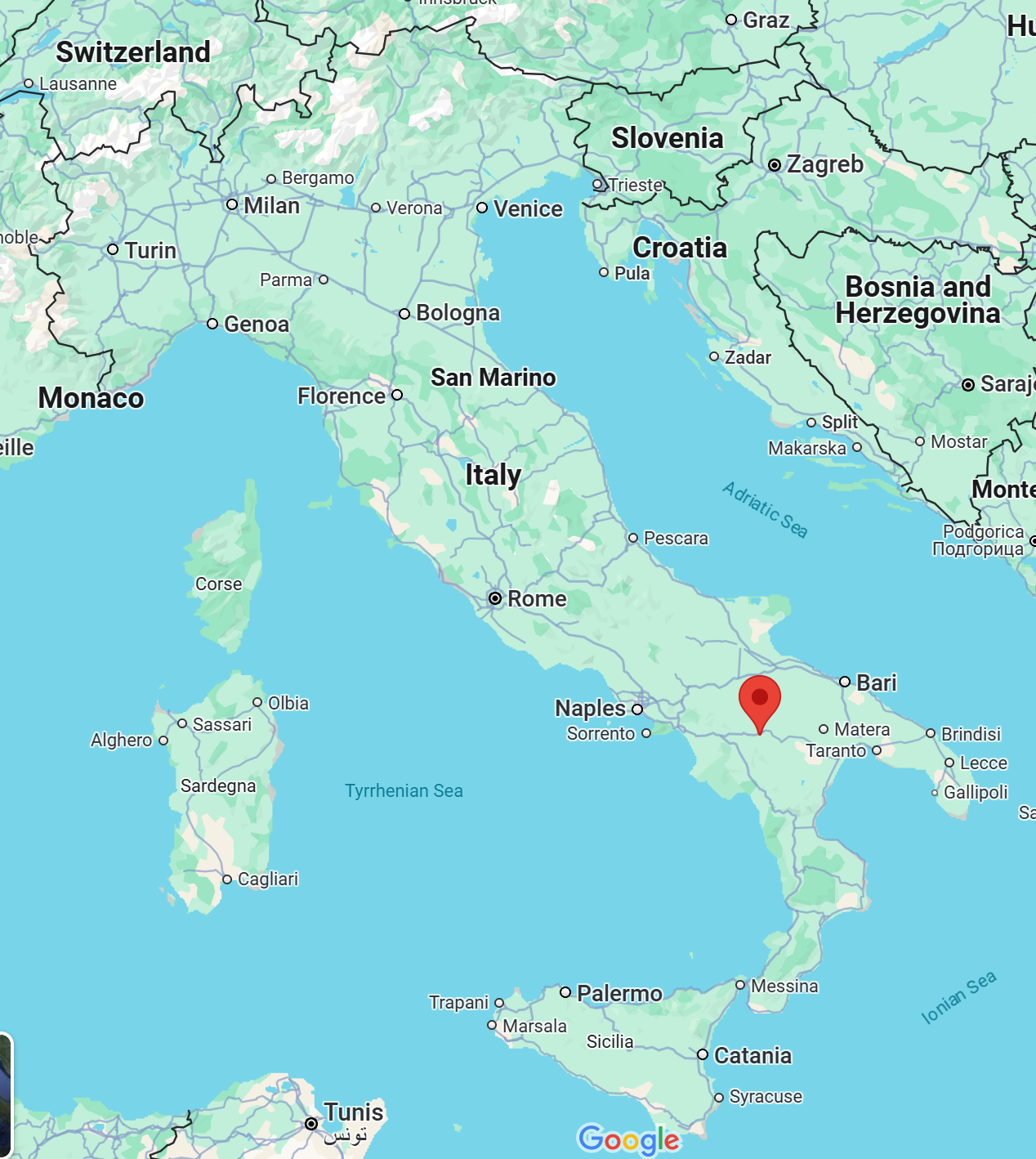
By the 1890s the southern provinces of Italy were struggling economically, compared the northern provinces4. Seeking respite from the unrest in the newly unified Italy, many emigrated and sought refuge elsewhere in Europe, some in South America, and others in the United States5. War and struggles for power likely drove Joseph Broncucia to emigrate, while job opportunities, rumors of gold, and immigrant friendly legislation attracted Joseph and other Italians to Colorado.
Upon arriving in Denver, Colorado many Southern Italian immigrants clashed with earlier immigrants from Northern Italy due to significant cultural differences. At the same time, American politicians pushed xenophobia onto its citizens; Italians were viewed as short tempered, violent, and different enough to be killed6. Denver provided a haven for all Italians as a neighborhood or colony called “Little Italy” emerged. Immigrants could preserve their culture, religious beliefs, and foodways with minimal judgement from nativist Americans. Colorado and other States in the West with its mountainous terrain and distinct seasons reminded immigrants of Italy7. Additionally, Italian immigrants found ample job opportunities—positions previously held by Americans currently fighting in the Civil War– in growing Denver in the 1860s. After the discovery of gold in 1858, immigrants and Americans flocked to Colorado8. Primarily, these immigrants found jobs in the mines. Gold mining during this period was dangerous at best and deadly at worst. Some immigrants, like Joseph Broncucia, eventually found safer jobs in different sectors of the food industry.
Initially, families like the Broncucia’s, Gaccetta’s, Arcieri’s, and many others obtained plots of land to use as farms. Unlike the eroding poor-nutrient soil in Italy, Colorado’s land in the 1890s was great for agriculture9.
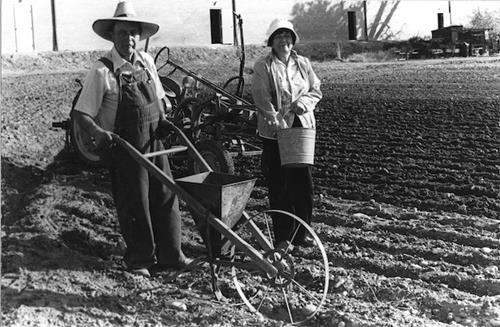
The Gaccetta family’s history in Colorado serves as an example. Frank Gaccetta left Southern Italy for North America where he initially worked as a miner10. Around 1889 Frank purchased land to farm in Welby, Colorado – a town just north of Denver. Frank’s son, John Gaccetta also farmed land in Welby, Colorado11. John’s daughter, Alice Gaccetta went into teaching in the public schools and retired to run for Colorado state representative in 1991. Alice served from 1992 to 199712. Farming provided enough financial stability for Alice to attend school and aim high.
In a similar way, the Arcieri family (Americanized to Archer) found prosperity in the food and agriculture industries of Denver, Colorado. Around 1926 Gaetano “Clyde” M. Archer and his wife ran a family farm in west Denver13. The farm’s specialty was celery; the work difficult and not profitable in the winter months. Their son, Clyde R. Archer witnessed a hailstorm destroy much of the farm and financially devastate his family14. Therefore, Clyde decided to work for Tennyson Meat Market in high school and used family farm Italian sausage making skills to help make sausage, and cut meats at the shop. After a stint in the Navy, Clyde worked in Denver at a grocery store until 1959. In 1959 Clyde began using his skills learned in his adolescence to provide Italian sausage for restaurants around Denver.
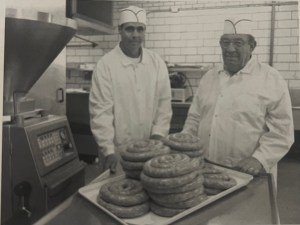
In 1964 Clyde’s Sausage & Ground Beef Company, Inc. expanded and scaled up to a meat plant. Clyde continued making Italian sausage using the Arcieri/Archer family recipe15. Finally in 1996 Clyde was able to retire and sold the company which still operates and bears its original name.
In Denver, Colorado Joseph Broncucia ran a vineyard in Potenza before emigrating from Italy16. Joseph Broncucia quickly discovered Colorado’s climate was unfavorable for growing grapes and thus winemaking. After working for a time in the mines, Joseph chose to clear his land on 70th Avenue and Broadway and farm in the 1890s. The Broncucia’s primarily farmed vegetables which they sold to the City Market, Denargo Market, and the Wazee market17. Joseph and Josephine Broncucia John raised three sons Mike, Louis and John. All three boys were given plots of land in a row on Broadway.
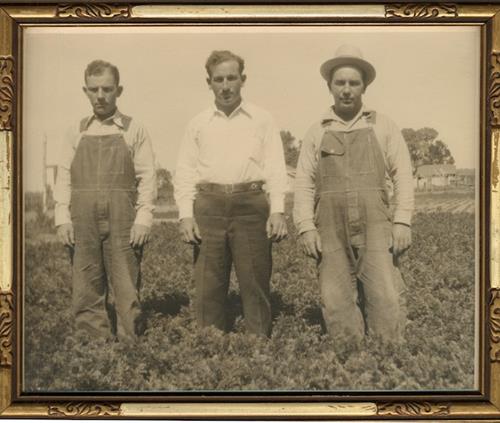
Eventually, most land was sold for gravel18. John Broncucia built a grocery store on his parcel of land19. This grocery store became the home of the original Mickey’s Top Sirloin. Michael (“Mike” “Mickey”) started the restaurant in 1952. Clearly, the Broncucia Family used agriculture and food to leave the mines and establish generational prosperity in Denver, Colorado.
Italian immigrants’ top priority was survival in a foreign land. They spent little time recording family or immigration history. Studying foodways of immigrants gives descendants deeper senses of themselves and appreciation for who came before. Without food and agriculture as a way to leave poverty, several Italian families would have struggled longer in Colorado.
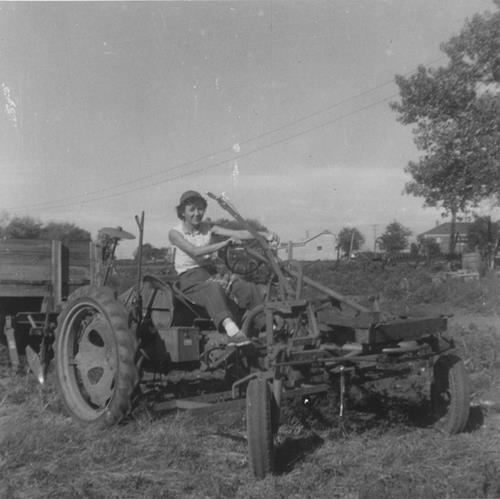
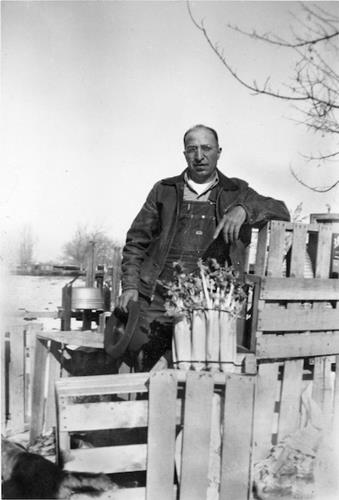
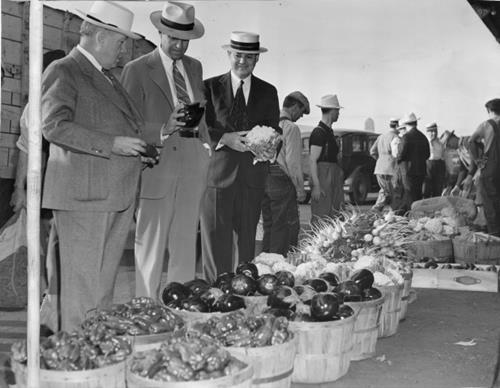
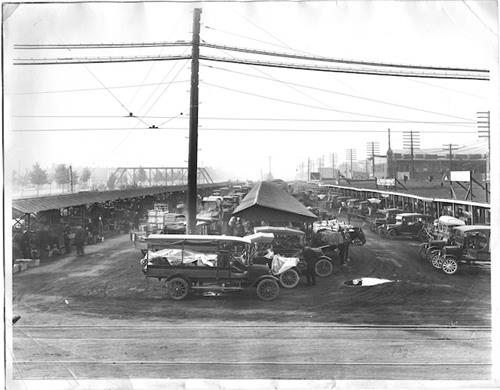
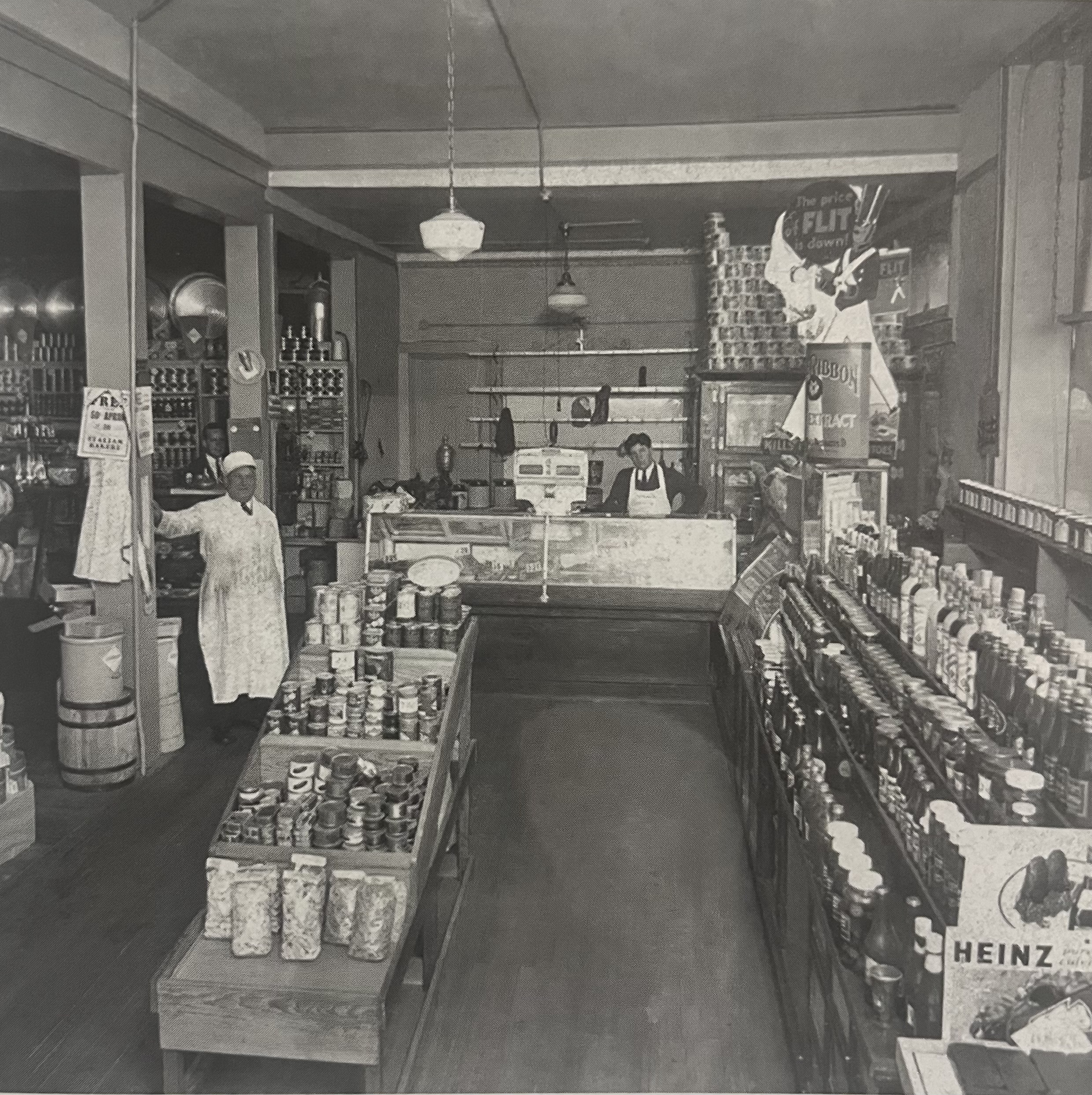
All Photos from Online Collection of History Colorado, formerly Colorado Historical Society

Notes
- Mickey’s Top Sirloin. (2021). About Us. mtsusa.co/ ↩︎
- Zahller, A. (2008). Italy in colorado: Family histories from denver and beyond. Donning Company. ↩︎
- Agenzia di Promozione Territoriale della Basilicata. (2024). History of potenza.http://www.basilicataturistica.it ↩︎
- History Matters. (2018, August 18). Ten Minute History -The Unification of Italy [Video]. YouTube. https://youtu.be/kjFscoiE8eI?feature=shared ↩︎
- Zahller, A. (2008). Italy in colorado: Family histories from denver and beyond. Donning Company. ↩︎
- — ↩︎
- — ↩︎
- — ↩︎
- — ↩︎
- — ↩︎
- — ↩︎
- — ↩︎
- — ↩︎
- — ↩︎
- — ↩︎
- Broncucia, M.F. (2007, March 12). Oral History with Mike Broncucia. History Colorado. https://5008.sydneyplus.com/HistoryColorado_ArgusNet_Final/Portal/Portal.aspx?component=AAFW&record=f72410cf-5602-44e6-bafc-ab0493d66165 ↩︎
- — ↩︎
- — ↩︎
- Zahller, A. (2008). Italy in colorado: Family histories from denver and beyond. Donning Company. ↩︎
Author’s Note:
Mike Broncucia passed in May 2023. He is survived by my grandmother’s cousin Marlene (Zadra) Broncucia, their children, grandchildren, and great-grandchildren. I hope this piece not only connects them to their roots, but to Mickey’s memory. The Broncucia Family’s history of immigration has helped connect me to my family roots and to the stories of my Grandfather Albert “Al” Gillen and my Grandmother JoAnn (Dyer) Gillen.
 digital Humanities studio