WHAT IS A TAMALE?
Nacatamal, known to be the style of the Nicaragüenses create their tamales and what they refer to them as. A Tamale is known in the many different cultures of Latin America in which they call them different names, such as Hallaca, Chuchitos, Bollo, Montuca, and Nacatamal. Although there are different names and recipes to many cultures, it is an authentic, traditional meal that is made with nothing but love and time. It is a dish that has the outside made of flour and seasons to give it flavor and then has other ingredients in the inside, such as a meat of choice, potatoes, vegetables, and more.

ABUELA’S RECIPE (including inspiration from a Honduran Lady)
Ingredients needed:
Banana leaves
Flour (MASA)
Choice of meat (chicken, pork, etc.)
Garlic
Salt
Black pepper
Red chile arbol
Cumin
Vinegar
Sweet peas
Paprika
Olives
Bell peppers
Onions
Manteca de cerdo (lard)


DIRECTIONS
Beginning with the first steps, you are going to want to get a bag of MASA, flour, in a big pot with eight cups of water, and it is supposed to sit so that there are no lumps, and mix. Next, get the meat of your choice and season with onion, paprika, green pepper, garlic, salt and pepper, chicken bouillon, cumin, vinegar, achiote, and let it cook for an hour, or until no longer pink. Put a pot of potatoes to boil, and then cut them into cubes, and that will be put to the side. Next, we will fry the rice in oil, but it will not be fully cooked just yet, so we will not add water. The rice will be cooked in the tamales after. We will need sweet peas, olives (no seeds), and banana leaves. The leaves will need to be washed, dried, and cut into halves. Once all of the ingredients have been prepared, we make sure that the MASA is cooking on the stove, so we will add black pepper, cumin, stir well and make sure there are no lumps. Once it is boiling then add oil from the meat and keep stirring until it is all cooked together and comes to a boil. IT MUST NOT BURN.


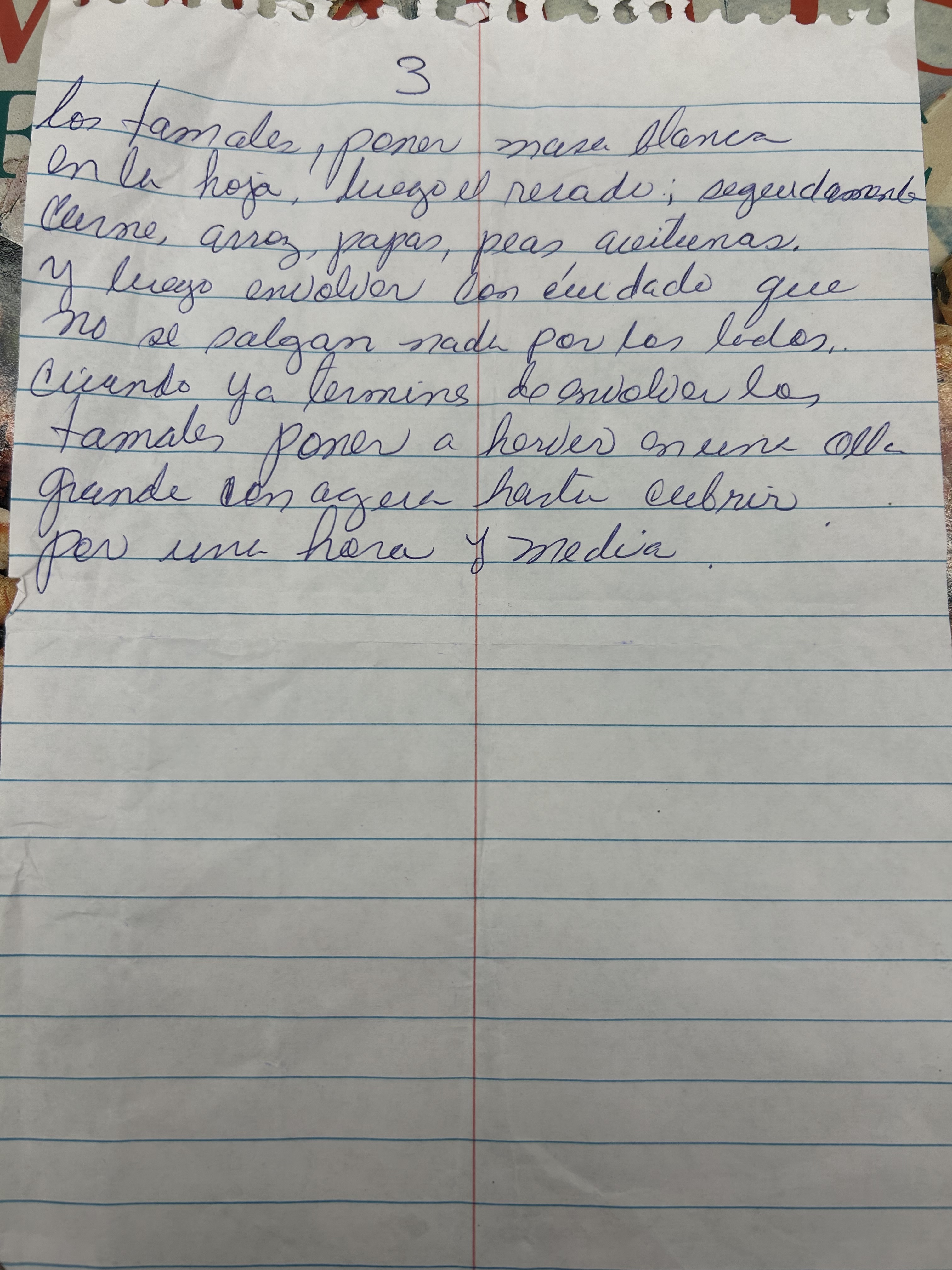
Red masa
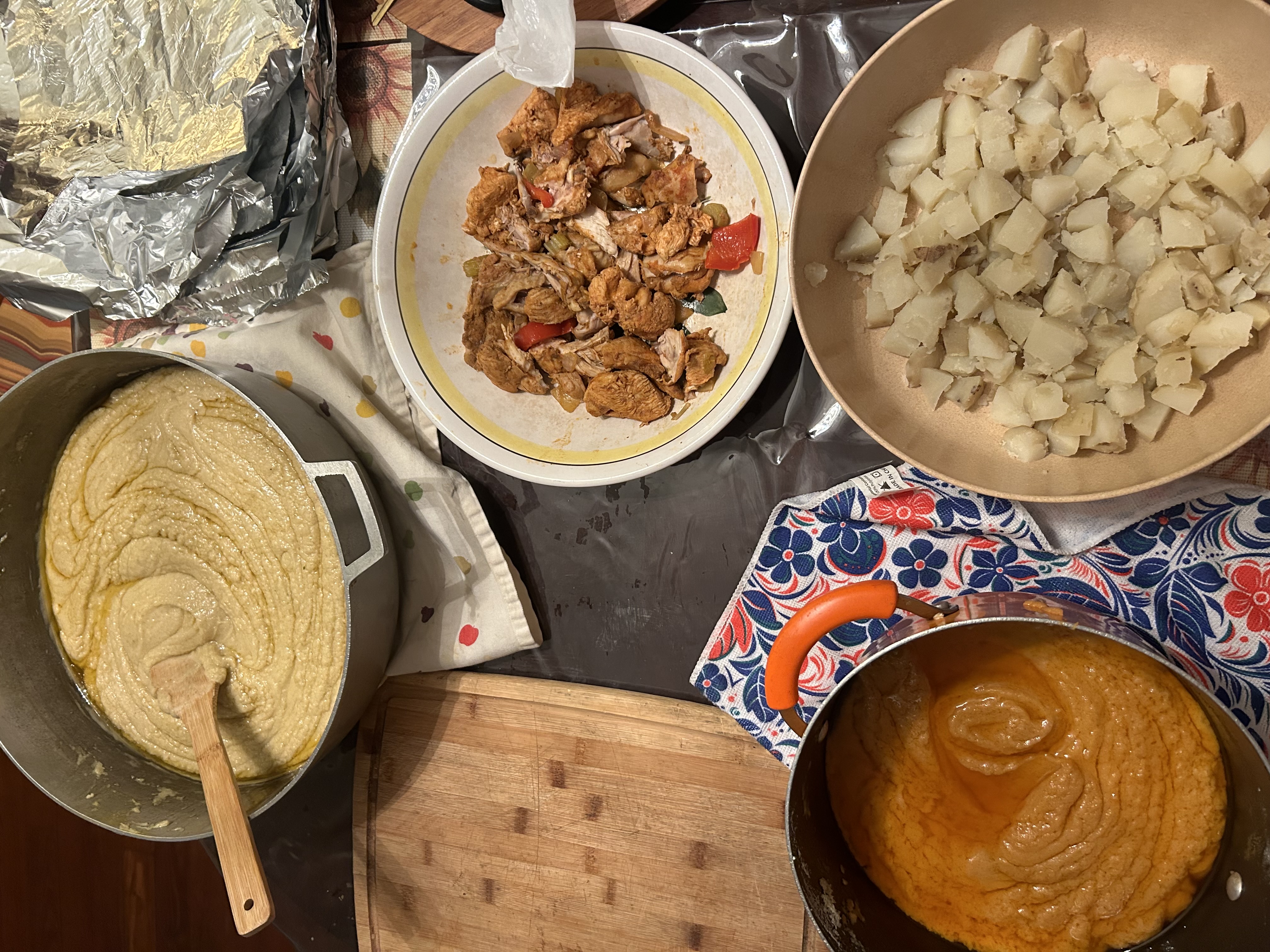
For the next masa we will need four cups of it in another pot with water. The juice of the meat will be added into it. This is the flour that keeps the color and adds all of the seasoning to the tamales until it gets thick and has a smooth consistency.

TIME TO ASSEMBLE
Then we will lay everything out in order to put the tamales together. Aluminum foil, banana leaves, red masa, meat, a scoop of rice, potatoes, peas, olives, and it will be wrapped tightly. Once they are done being prepped, you get a large pot and place the tamales in there. Once the tamales start boiling then we will set the timer for an hour and 30 minutes.

THE HISTORY WITHIN MY FAMILY
Beginning with my great grandmother, abuelita Irma, she began the tradition within the family to take the time into making tamales for the family, specifically during the holidays. This became a dish that continues through the generations, and will continue to thrive, as I have learned how to create this delicious dish with my grandmother. Both of my grandmothers, on my mom and dads side, take the time to make tamales but they are done differently in that there are different techniques and ingredients used. My family is from Honduras, so they are made similarly, but as mentioned before there can be different meats used and toppings. My grandmother from my dad’s side specializes in chicken tamales, while my grandmother from my mother’s side specializes in chicken and pork tamales, as well as a sweeter tamales that can be known as montuca. Montuca is a tamale that is more on the sweeter side due to the flour being made with corn, compared to a savory one, and it can have meat as well but usually there are no other toppings.
GENDER
In regards to gender, the females in my family are the main ones that are known to cook. We also have to serve the guests, male or female, and that is how it goes with any drinks or food. With tamales, it is a very time consuming task and requires a lot of patience and carefulness. It is well known that the women are the ones who are assigned to making this delicacy, as I have also read about in another book, Why Migrant Women Feed Their Husbands Tamales: Foodways as a Basis for a Revisionists View of the Tejano Family, “Only women make tamales.” Not only is it women, but it is known to be middle class women, in which my grandmother correlates with. Abuela Sonia is not only a woman that is middle class, but she cooks for her loved ones, as well as the men that she works for at her job.
TRADITION/ PERSONAL ANSWERS
This is a well known tradition for my grandmother to cook tamales every year for christmas. My grandmother also cooks it during the summer when there is extra time for her, and she can also make extra income, but the majority of the time it is just to share the delicacy.
I asked my grandmother a few questions and this was her response. “For me it is very important to cook, I love cooking and it is not optional. Abuelita (her mother, my great grandmother) used to make tamales in Honduras during the holidays, and she also loved to cook. At the same time, I always care about cooking whether it is for family, friends, or at work. Abuelita taught me how to cook a variety of foods, but I learned how to cook tamales when I came to the United states. I use our honduran recipe but in central america everyone makes tamales in different ways. When I was 9 and 10, I used to play in the kitchen but once I got married that is when I started caring about cooking even more and with more enthusiasm.”
SOURCES
- Quintana, P. (1994). Mexico’s Feasts of Life (p. 55). Council Oaks Distribution.
- Williams, B. (1984). Why Migrant women feed their husbands Tamales: Foodways as a Basis for a Revisionist View of Tejano Family life. Ethnic and Regional Foodways in the United States, 6056696. https://louis.hosts.atlas-sys.com/illiad/LLM/illiad.dll?Action=10&Form=75&Value=6056696
- Antojitos Ktrachos y Más. (2024, November 14). Famosos tamales navideños [Video]. Youtube. https://www.youtube.com/watch?v=HPQ8EjhkmBU
 digital Humanities studio