Growing up, I noticed that my grandmother’s cooking from my mom’s side was always different from my grandmother’s cooking on my dad’s side, even though they are both from Central America. I always knew they lived very different lives growing up, which mostly influenced how they cooked authentic Hispanic dishes. My grandmother Ana, my mom’s mother, lost her mother at a very young age and didn’t have a present father. This led her and her siblings to be in an orphanage for the remaining time they were in Honduras. Ana was born 80 years ago in 1944. The resources during this time, especially in the orphanage, were not plentiful, and this led my grandmother to lack many experiences growing up.
The nuns who ran the orphanage and took care of the children did not allow any of the girls to be near the kitchen. My grandmother said that they were constantly told to stay away and would even get in trouble if they did. Learning to cook was not something they were able to learn, which was surprising for me to hear knowing how much they wanted women to have domestic responsibilities like taking care of the household. This domestic way of living continued into her school life. When going to school, my grandmother aspired to become a teacher, mainly because this was one of the specific female roles that they wanted them to lean into. This also did not have any need for my grandmother to have any knowledge about cooking until she met a man. Through her time walking through school with this guy, the nuns had found it because the school and the orphanage were connected. They thought it would be best for her to move out and get married to this guy.
This opened up a whole new world for my grandmother as if it gave her a sense of freedom. She was around fifteen/sixteen years old at the time, so she had spent a good portion of her childhood with the nuns. After moving out and getting married, she realized she needed to learn how to feed her husband and become a housewife. Just a reminder that up until this point, she has no experience in the kitchen and knows nothing about the ingredients or the tools in the kitchen. She had to fully learn from scratch and teach herself almost everything she knows now. During this time, especially in Honduras, she had no access to cookbooks and little access to other people. She learned something from her neighbors, but that something was very little. One of the first things she attempted to make was beans and rice. This is funny since the recipe I’m going to be talking about is centered around rice. The first time she made rice, it came out so overcooked and so mushy. This didn’t surprise me, however, since a lot of people have trouble making rice. But what I was so surprised about and what led me to burst into laughter was her making beans. Now beans aren’t that complicated either, but I had no idea that the beans, specifically pinto beans, had rocks in them due to how they were harvested. In all grocery stores near me, there are no rocks in my beans, so this was something I had no idea about and was very shocked to hear about. Turns out, at that time, my grandmother had no idea either. She had no idea that she had to pick out the rocks from the beans and thoroughly clean the beans. After cooking them the way she thought they should be cooked, she served them to her husband. He immediately spit them out and asked her if she even cleaned them, and she was stunned. Thinking about this scenario happening is so funny to me, how would she have even known?
Hearing this story and how she came to learn to cook makes so much sense when comparing her cooking to my other grandmother’s or other Hispanic cooks I know. It’s because almost every authentic Hispanic dish is authentic in its own way and uses ingredients that have worked for her and her family throughout her life. Of course, she learned things from other people here and there, like learning a little bit about how to make tamales from her neighbors. Everything about this gives me confirmation of why I love her cooking so much, and that’s because it’s unlike most others. Eating her food is truly a warm and homey feeling.
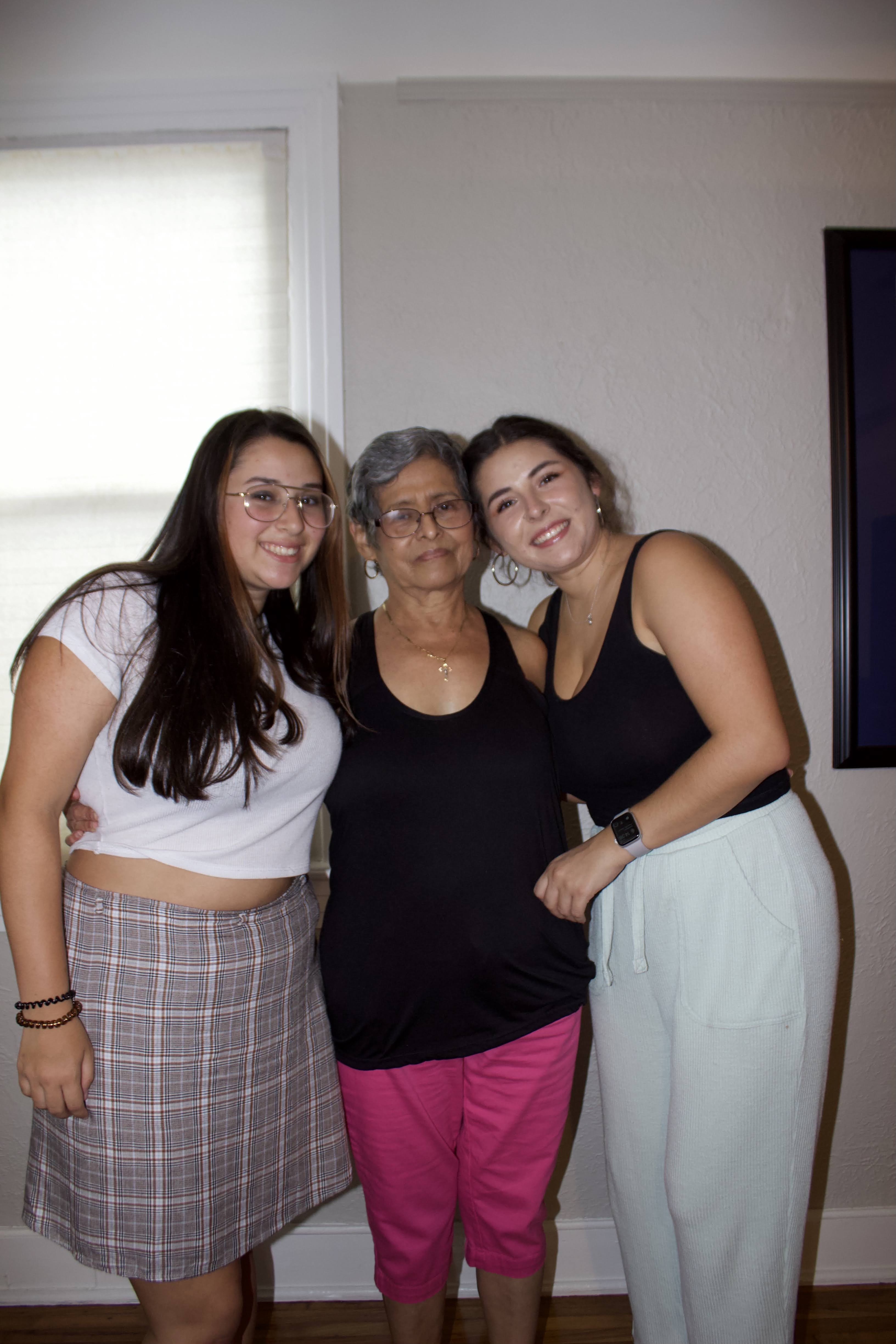
A specific dish that has always popped out to me, especially because of its difference from my other grandmother’s dish, is arroz con pollo. “Arroz con pollo is a much-loved Latin American dish that combines seasoned rice, tender chicken, and vegetables in one big pot…” (Segal). This is such a simple, traditional, and delicious dish that is packed with so many different flavors even though the ingredients are so simple. Looking at other recipes of arroz con pollo, I realized that my grandmother’s recipe is a very simple version of arroz con pollo.
Here is the comparison of my grandmother’s recipe vs a recipe I found in the cookbook a cookbook titled Española Valley Cookbook: Recipes from Three Cultures by Anglo, Indian :
Forewarning that my grandmother’s recipe comes with barely any measurements of what she puts into it and her directions are not as deep and detailed as a traditional recipe might be. This is all said from her brain and has never been written down anywhere.
- Small whole skinless chicken
- 1 cup of rice
- 1 can of mixed vegetables
- ½ green pepper
- 1 onion
- 1 stalk of celery
- 2 tomatoes
- 1 jar of pitted green olives
- 1 tbsp salt
- 1 tbsp pepper
- No oil! Chicken broth from the chicken instead
Wash and clean the chicken, and take off the skin. Boil chicken for one hour. After boiled, do not shred the chicken. Instead take apart the chicken in chunks making sure there are no bones. In a 4 quart pot, pour in half of the chicken broth that was made from boiling the chicken, Chop green pepper, onion, celery, and tomatoes. Drop everything into the pot including the cup of rice, canned vegetables, all chopped vegetables, olives (only the olives, none of the juice), seasonings and the chicken. Add water if there is not enough liquid to cook the rice. Keep on low/medium heat and continuously check to make sure it doesn’t get dry. If rice does not cook or gets dry add a little more water. After the rice is cooked, it is ready to serve.
As I stated before, it is a very simple dish. What makes it so easy is that it is pretty much made in one pot and the most you have to do is take apart the chicken and cut the vegetables. Knowing how easy this is and the small amount of kitchen tools needed to make it, I can imagine that it was not super hard for my grandmother to learn to cook. Possibly something she could easily make when she lived in Honduras. When I was told this recipe, I was very surprised to hear there was olives in it because I have no memories of them being in the dish. I then remembered I didn’t like olives and my grandmother took them out of my food when she served it to me.
The next recipe uses simple ingredients but definitely uses more of them and is a bit more complicated in the cooking process. The cookbook from which the recipe is from is from 1975 so it is a bit past the time my grandmother probably learned how to make arroz con pollo. Especially because it is more complicated as well as it uses different kitchen equipment including a dutch oven.
- One 3 to 4-pound frying chicken
- ¼ cup shortening
- 2 medium onions, peeled and finely chopped
- I clove garlic, peeled and sliced 2 medium tomatoes, peeled and diced
- 5 cups hot water
- 2 cups long grain rice
- 1 package (10-ounce) frozen peas
- Pinch saffron
- 2 teaspoons salt
- ¼ teaspoon pepper
- 2 canned pimientos, cut into strips
- ¾ cup ripe, pitted olives
“Wash chicken, cut into serving pieces and blot dry with paper towels. Heal half of shortening in a 6-quart Dutch oven. Brown chicken in hot fat, turning to brown well on all sides. When chicken is almost browned, add onion and brown it along with the chicken. Then add gals and tomatoes and cook for 5 minutes longer. Add 2 cups of the hot water. Cook over medium heat until most of the moisture has been absorbed and the chick is lender. Meanwhile, heat remains shortening in a saucepan. Stir in rice and cook over medium heat stirring constantly, until rice is fried a golden brown. Cool slightly before adding it to the chicken in th Dutch oven. Mix well and add the remaining 3 cups of hot water, peas, saffron, salt, and pepper. Cover and cook over low heat for 30 minutes or until rice is tender. Serve Garnished with pimento and olives, Makes 4-6 servings” (Española Valley Cookbook: Cookery Recipes from Three Cultures, Anglo-Spanish- Indian).
One thing to remember is that even though my grandmother’s recipe is from before this recipe, her recipe was written for the first time today. Therefore it is not written the same as if it were written during the time she came up with it. Now looking at this recipe, the first thing that pops out to me is the use of shortening. Although it is not as commonly used today it is an oil, something my grandmother does not use. The use of vegetables is the same despite different vegetables being used. The processing of browning or “frying” the rice is a nice touch as I can imagine it adds a nice flavor. The use of saffron in this recipe is interesting because I haven’t heard of Hispanic dishes using the spice saffron very often. This recipe is a bit more difficult and time-consuming but still delicious. But as said before, what stands out the most about my grandmother is how simple it is and how she came to learn that dish.
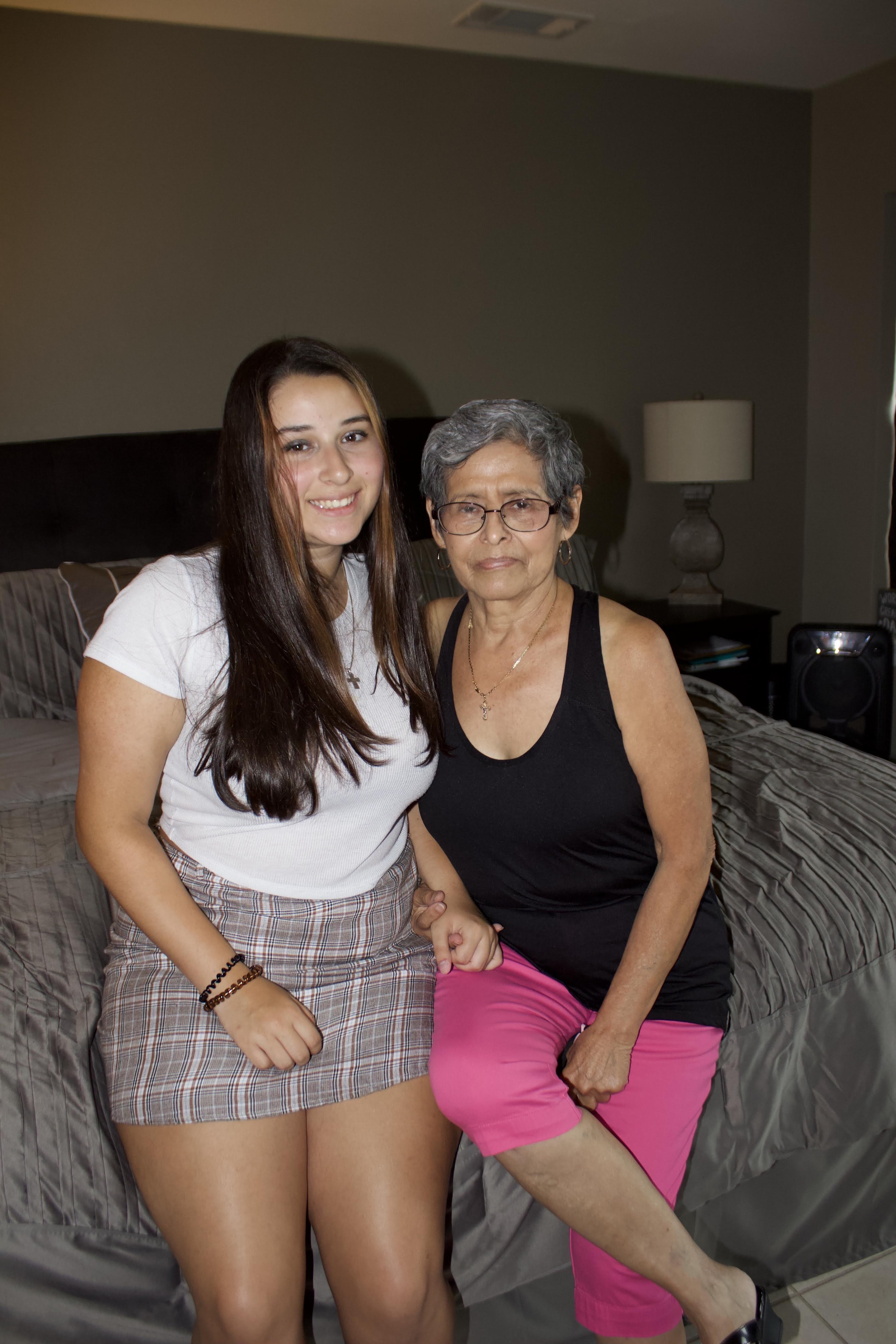
Arroz con Pollo is most likely not the only dish that stands out when I think about my grandmother’s cooking. Cooking and the journey she took to learn how to cook in the kitchen is an important part of her life. Who would’ve known that a girl who grew up in an orphanage who had no one to teach her how to cook, has been able to provide her children and her grandchildren with authentic Hispanic food? And when I say authentic, I mean authentic to her and our culture. Knowing she taught herself almost every recipe she knows matters so much to me when I am the one who is going to continue passing them down.
References
Segal, Jenn. “Arroz con Pollo.” Once Upon a Chef, 8 Jan. 2024,
www.onceuponachef.com/recipes/arroz-con-pollo.html.
Española Valley Cookbook : Recipes from Three Cultures, Spanish, Anglo, Indian.
Revised and Enlarged edition, Española Hospital Auxiliary, 1975
 digital Humanities studio