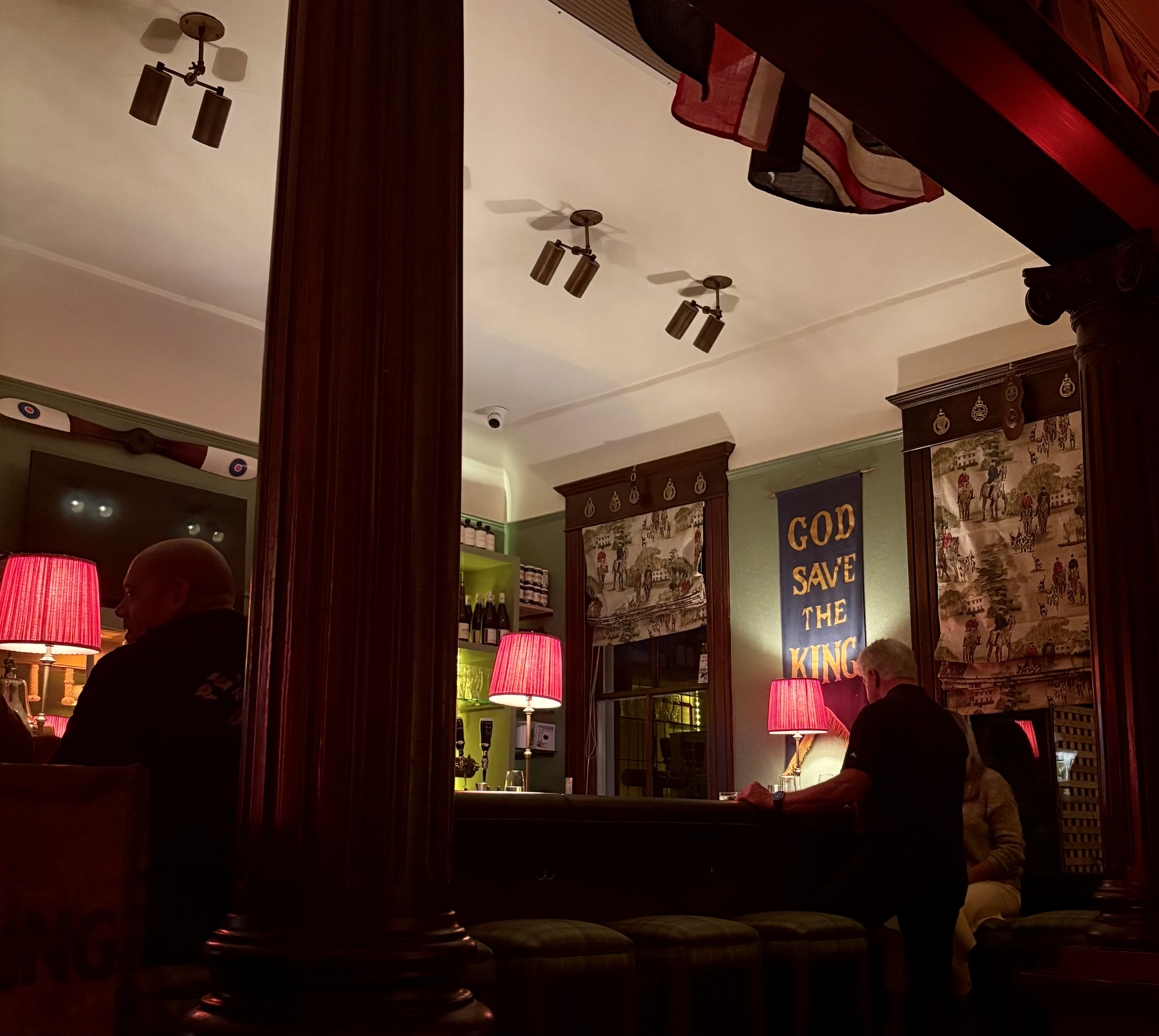
‘The Bell New Orleans’, located in mid-city, recently opened as a restaurant-pub joint with an ‘English accent’ (as their website states), sparking my intrigue into how the British pub has a place in this electric, melting pot of food, music and one-of-a-kind culture that is The Big Easy.
The public house (colloquially known as a pub, deriving from seventeenth-century ale houses) is a true staple of British culture. It has been adapted and reinvented globally, all stemming from the atmosphere of a British tavern. The pub has held particularly true to its influence on the backdrop of American drinking and dining culture and The Bell is a perfect example of this.
I, coming from London, have a close relationship with the colder winters that my city endures, which has also meant there’s an abundance of blissful opportunities to head down to cozy pubs with my friends and family in the evenings or tired on a Sunday for a roast. I’m living in New Orleans for a year abroad from my home university in the UK, engulfing and immersing myself head first into the unique culture that makes NOLA, as well as just turning twenty-one has meant I can legally drink, unlocking a completely new image and vibe.
I like the idea that the pub is akin to a sanctuary, a third place, after their own home of course, and then the workplace comes the pub. This idea can be interpolated onto understanding the demography of British pubs with what areas they are located in, either in the city targeting workers who are in desperate need of a draught as soon as the clock strikes five, or contrastingly those in the idyllic rural countryside of England, attracting countrymen or visitors from far and wide. The Bell consists of a mixture of this, offering both a city feel yet holding a cozy air with tartan upholstered seating and clubhouse red-cotton vintage lampshades.

Yet, you wonder, what truly makes a quintessentially ‘British’ pub?
The task of replicating the quintessential British pub can’t simply be built from an image or architectural recreation, but an emulation of atmosphere and societal attitude towards the space is what truly makes a pub; an ever-evolving institution of sorts. Where culture, nationalism, and alcohol consumption collide forming the drinking space that is the pub, where gastronomy meets a range of kegs and a local where everybody knows everybody and their dogs.
Yet it is also true that the pub has indeed changed in its nature, modernising from the traditional grained woodwork room with a stained glass edifice and mirrored ornaments behind the bar, to a more open plan, perhaps gentrified metal and mod space filled with a roster of peculiar named IPA’s.
This is what I wanted to explore and underpin when visiting The Bell in the New Orleans area, and to what lengths it has gone to emulate such referring features of a British public house. And so, I excitedly paid a visit to ‘The Bell’ one Sunday evening, serving as a tool for comparison to my home pubs that stay true to the old wooden fascias, The Holly Bush and The Flask both in Hampstead and Highgate. I wanted to evaluate how effectively The Bell as an establishment recreated the true essence of a British pub, even though I was 4,000 miles away from where I usually enjoy a Guinness and some scratchings.
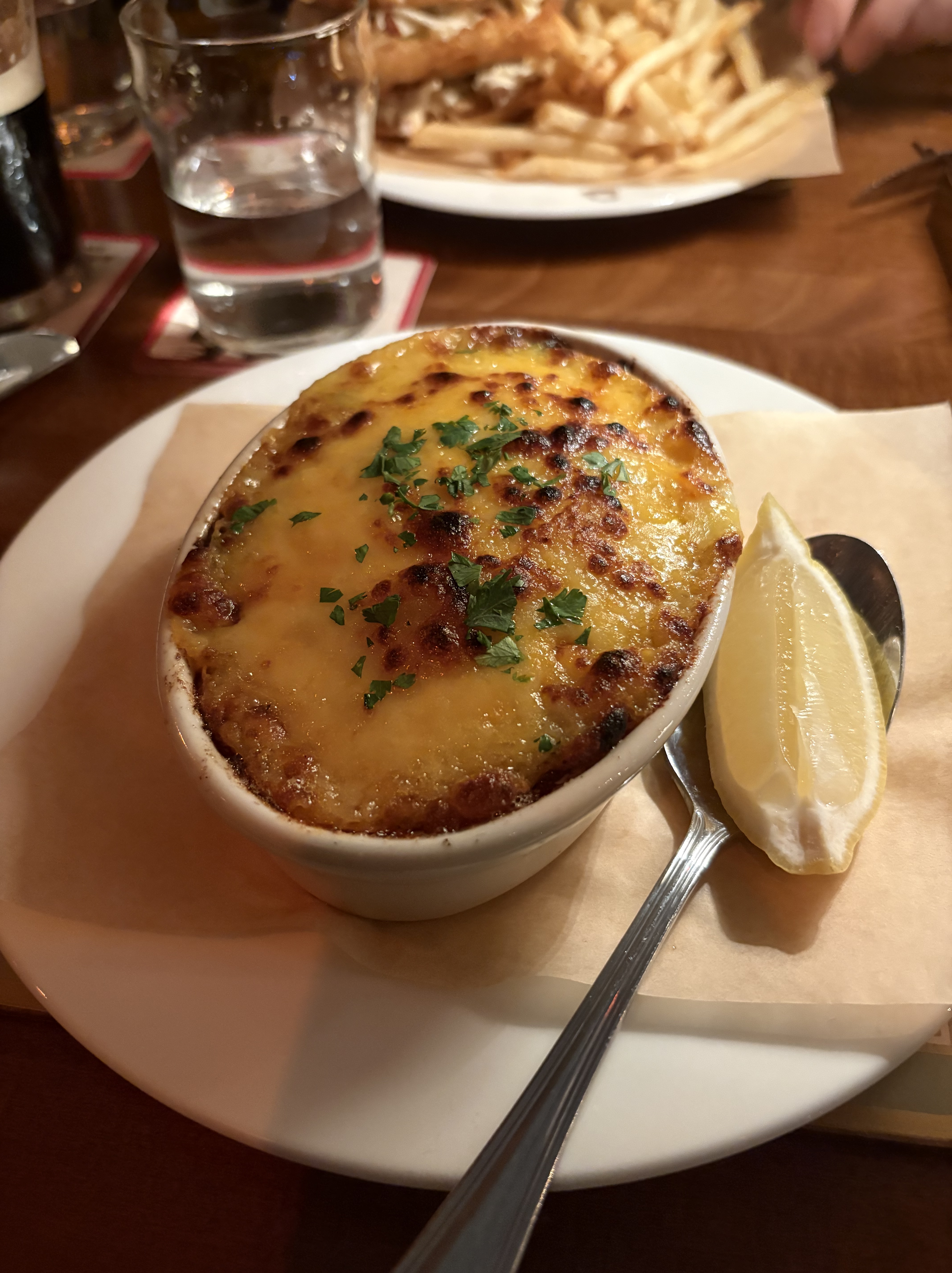
Immediately, walking inside the mood and atmosphere felt like a restaurant inside of a British pub casing. There was immaculate attention to detail, from the Guinness coasters to the cork placemats depicting nineteenth-century London landmarks to even traditional pub carpets in the dining room imported from Swindon. I ordered the FIshmonger’s pie (fish and vegetables under a golden brown mash and cheese topping) with the pub salad (a lettuce and mustard vinaigrette salad). It was delicious, and I met the manager who was also British, perhaps adding to the characterisation that I had stepped into a pub back home.
Thus, I see ‘The Bell’ as a restaurant with a perfect imitation of the pubs that I go to back home. The wooden structures leading back to the bar, the fireplace sat below a framed Tommy Cooper poster in the dining room, bunting along the pub room, its all a clear influence that reminisce a clubhouse-style pub. It certainly hits the nail on the head when it comes to the well-curated paraphernalia, but it takes time, legacy, and reputation to fully imprint and etch a true authenticity to a pub, which if remains for years to come ‘The Bell’ will certainly obtain.

Citations
Jennings, P. (2021) The Local: A History of the English Pub, The History Press, Cheltenham, UK.
Pratten (2003) The changing nature of the British pub, British Food Journal 105(4/5), pp. 252-262.
Thurnell-Read (2024) ’It’s a Small Little Pub, but Everybody Knew Everybody’: Pub Culture, Belonging and Social Change, Sociology 58(2), pp. 420-436.
Wilson (2004) Globalisation, differentiation, and drinking cultures, an anthropological perspective, Anthropology of Food (3).
All imagery posted is under my copyright.
 digital Humanities studio