Latin America is a different world economically and socially from the United States. As a Latina woman from San Pedro Sula, Honduras, I have experienced both worlds firsthand. They are defined largely by immigrants and the vast melting pot of cultures and can appreciate food and its power to bring people together. Food mends our cultural differences through our connection and acceptance of each other’s differences. We can understand diverse culinary traditions through globalization. No one has been more successful at this than McDonalds. It is one of the most well-known fast-food chains in the world. How does a restaurant founded in Illinois connect to the different cultures and economic differences in Latin America?
McDonald’s is the biggest name in the fast-food market. Since its opening on May 15, 1940, they have expanded to over 40,000 locations and become the biggest and most infamous restaurant worldwide. Stretching from North America, South America, and African Markets, they serve over millions of people every day. They are a great example of a successful franchising business. However, their accomplishments have been through trial and error. Since the beginning, they have worked to create a quick delivery process. They planned to reduce their menu to burgers, french fries, and milkshakes to ensure fast and delicious food every time. The result was the development of the Speedee service system, which transformed typical production and manufacturing processes in restaurants (Chatelain, Marcia). Since then, they have expanded their menu to over 100 items while keeping a steady flow. With many people having a busy schedule and long commute times, McDonald’s fast service can be an advantage.
McDonald’s has received their fair share of criticism for their unhealthy serving sizes and menu. Parents, especially, have been the voice of this concern since children are their main consumers. “In 2004, the filmmaker, Morgan Spurlock, released Super Size Me!, a documentary account of his 25-pound weight gain from consuming a McDonald’s for just 1 month…McDonald’s announced plans to phase out its Supersize menu items” (Lisa R. Young, and Marion Nestle). To remedy this, they have expanded the menu to include many options, like a small cheeseburger or a three-layered burger for different appetites. They also offer gluten-free, sugar-free, dairy-free, vegan, and low-calorie choices to accommodate dietary restrictions. For kids, they have a four or six-piece chicken McNuggets meal as well as kid-sized hamburgers. They have included apple slices, and a choice between water, milk, or sugar-free juices. Thanks to its abundant menu, Mcdonald’s has an item for everyone to enjoy.
Appealing to Latino Culture
American food and Honduran food are drastically different. American cooking has many cultural influences like Chinese and Russian cuisines and focuses on meat, potatoes, and vegetables as their primary food groups. Honduran food has local and conventional tastes and has a combination of “Mesoamerican (Lenca), Spanish, Caribbean, African, and Garifuna cuisines” (“Customs & Cuisine of Honduras – Together Women Rise”). Due to the influence of indigenous immigrants and colonization, Honduras has intertwined cooking techniques and cultural fusion into its dishes throughout history. Cultural dishes often feature beans, plantains, and tortillas with portion sizes as big as they are in America. Many Hondurans like to buy food that gives them the best bang for their buck–meaning they search for the largest serving of food for the cheapest price. For example, a popular dish is fried Yojoa fish. The whole fish is served and paired with a mountain of deep-fried plantains and pickled onions. McDonald’s has to adapt and modify their menu to these vastly different cultural tastes, portion sizes, and dietary preferences. “The company does product tests and experimentation through the addition or removal of food items based on local trends and popularity among consumers”(“McDonald’s international strategy: Adapting around the world”). In Venezuela, McDonald’s offers arepas, which are stuffed cornmeal cakes filled with ham and cheese. They are a Pre-Columbian dish, meaning they were created before Christopher Columbus arrived in the Americas, and were popularized in Venezuela and Colombia due to the availability and inexpensiveness of corn. McDonald’s does something similar in Honduras. They served toasted bread with beans and cheese as a interpretation of the baleada. They also offer toasted bread with ham and cheese as a copycat empanada, which originates from Portugal but is equally popular in Honduras. For breakfast, they include a classic Honduran dish of beans, cheese, tortillas, scrambled eggs, and plantains. They have even introduced traditional American snacks due to their popularity in Latin American countries. For instance, they serve pancakes with Nutella and strawberry jam, McFlurry crunch, and spicy cheddar potato wedges. Due to their demand via media exposure and brand recognition, selling these desserts is an effective marketing strategy to increase sales. “Prior studies have found that in general, McDonalds makes only minor modifications to their menu in international locations…McDonald’s continues to practice a strategy of consistency with only minor modifications from its successful US model as it expands internationally” (Oldakowski, Ray, et al., 41). McDonald’s considers typical Latin American meals and integrates them into their original menu. By not creating significantly different menus, they can reduce preparation and cost by using the same main ingredients from US locations. This approach helps their brand image remain consistent globally through standardized operations and continuous development.
McDonald’s tries to relate to teenagers internationally by collaborating with trending artists. These partnerships help them stay socially relevant through connections to pop culture. For instance, they have created custom meals for BTS, Saweetie, and Travis Scott. Even though they just mix and match existing meals and desserts, they gain publicity with custom sauces and celebrity associations. “McDonald’s debuted the meal in September, and its U.S. same-store sales, a key indicator of a restaurant company’s health, swung from an 8.7% drop in the second quarter, at the height of virus lockdowns, to a 4.6% gain in the third, due at least in part to the Scott Meal” (Brown, “How hip-hop superstar Travis Scott has become corporate America’s Brand Whisperer”). These collaborations include limited-edition goods, which create a sense of exclusivity and competitiveness amongst fans. This successful business move has influenced Burger King to create sponsored meals for the likes of Nelly, Anitta, and TikTok star Lil Huddy. These collaborations help businesses create traction, helping them gain a diverse customer base. McDonald’s catered specifically to the Latino community with the J Balvin meal, which included a Big Mac, medium fries, an Oreo McFlurry, and ketchup. He is one of the best-selling Latino artists and has paved the way for other reggaeton artists by proudly embracing his culture and influencing others to do the same.
He produced the music video, “Dorado,” exclusively for this collaboration, where he plays different characters, including a grandpa, a basketball player, and a McDonald’s worker. In his lyrics, he thanks his mom for making him Latino and relating with Hispanics as a brotherhood and family. He tries to unite Latinos from different walks of life by appreciating the consumers and workers. (“J Balvin and McDonald’s team up once again to create “Dorado,” a Collaboration That Shines a Golden Light on Latino Culture”). Whether he was working behind the cash register, in a luxurious car, or the customer, he was dancing, symbolizing how Latinos celebrate life no matter the circumstances. It spreads a message of positivity by motivating Latinos to stay strong despite the many challenges we face as minorities.
McDonald’s resonates with the Latino community through familisimo, a cultural value that entails complete dedication to family. Latinos usually have family members like aunts, uncles, or grandmas living with or near them. This can be due to a lack of resources, money, or the fact that they value a support system. It is the cultural norm to take on the responsibilities of family members out of loyalty and respect. We develop emotional relationships with them that create a sense of unity and oneness. This is why immigrant children are not pressured to move out, but instead persuaded to stay home and look after their parents and siblings. Latinos prosper on interdependence and the comfort of knowing someone is willing to take care of them.
The McDonald’s commercial “First Drive” is a reflection of this family dynamic. The video centers on two parents secretly spying on their daughter for her first drive. The daughter pulls into a McDonald’s drive-through and orders donut sticks for her and the couple behind her, essentially blowing their cover. This video demonstrates how protective and committed Latino families are to ensuring the well-being of their children.
The McDonald’s “Tio Roberto” commercial is another example. It depicts the language and cultural barriers Gen Z Latinos face. In the video, the son, Beto, has trouble connecting with his uncle “Roberto” who solely speaks Spanish. Beto failed to translate the directions and hand him the correct tools to repair the sink. This tension exemplifies the frustrations often experienced among Latino families in the United States. Parents believe that children ignore their heritage by rejecting their native language. This belief stems from Latin America, where not speaking Spanish is frowned upon and seen as a form of disrespect. This can cause a divide among family members due to the inability to communicate. However, the golden arches of McDonald’s save the day. The final scene shows both characters laughing and connecting through their pleased expressions. They were able to communicate without uttering a single word. The video ends with the phrase “Todos hablamos McDonald’s” which translates to “We all speak Mcdonald’s.” This is a powerful video that emphasizes the impact food can have. It also spreads a message of inclusion, which supports McDonald’s values of diversity and equality. McDonald’s represents a common issue by advertising itself as the solution. They effectively relate to their Latino consumer base by addressing problems through funny, heartfelt videos. This helps develop strong customer relationships by making them feel valued and understood. As a result, it builds customer trust and retention.
McDonald’s USA has previously participated in Hispanic Heritage Month. This year, they collaborated with Millennial Lotería, which is an iconic game within the Latino community. It is similar to bingo as it is based on probability and luck. However, the cards have characters and objects relevant to Mexican history and culture instead of numbers. Game nights were hosted in LA, OC, Riverside, and Ventura counties by McDonalds. Over 100 people showed up and played with fellow Latino community members, family, and friends. They have previously sponsored the Latino Heritage Festival for three years, coordinated the Triunfadores annual awards luncheon, donated one million dollars to the National Museum of American Latino, and spotlighted Hispanic visual artists through the Ritmo y Color festival. Ritmo y Color is a Hispanic-inspired music and art collaboration. It showcases cultural artwork and music performances from Camilo, Prince Royce, and Lunay. Hispanic artists painted McDonald’s locations in Chicago, New York, Dallas, San Antonio, Miami, and San Jose. Inspired by their indigenous roots, the artists designed locations with traditional Mexican patterns, cultural symbols, and bold colors. Bold colors have been used historically as a sign of peace and activism. For instance, In Honduras, the flag uses a turquoise color to symbolize the sky and alliance. However, the origins of color can be traced back to the Mayan people, who developed them from natural resources like plants, minerals, and stones. Hence, these designs have a deeper meaning that represents the hardships Latino artists have overcome from decades of rejection and discrimination by established US museums. They celebrate Aztec and Mayan culture and its influence on 20th-century American art. They serve as a way to spread love throughout the community and celebrate our ancestral and spiritual figures.


McDonald’s believes in equal opportunity no matter race, gender, or age. This belief is evident in their commercial “Hacer Más”. Their overall message is “Ser mas, hacer mas, y vivir mas”, which means “Be more, do more, and live more.” This message encourages Latinos to chase their American dream no matter how impossible it seems, break stereotypes of being uneducated and lazy, and make our family proud. At the end of the commercial, they show an image of Katya Echazaretta, a 27-year-old electrical engineer who has been an icon in the Latino community as the first Mexican woman to go to space. McDonald’s has collaborated with her for the HACER National Scholarship Program, where she will mentor Hispanic students to get a chance to win the $100,000 prize for tier 1 winners, $20,000 for tier 2, and $5,000 for tier 3. McDonald’s recognizes that Hispanic children do not have the same educational opportunities as American children do. “One in ten Hondurans are illiterate, and in rural areas, this increases to two in ten…Sixty-three percent of the Honduran labor force has only a primary education” (Orozco et al., “Educational challenges in Honduras – the dialogue”). Due to economic troubles, most parents do not have the funds to continue their children’s academic education, so they teach them to work and help pay the bills instead. Poverty in Honduras hinders the chances for most children to further their careers and live a worry-free childhood. They may feel left out and hopeless because they have dedicated their life to maintaining their survival instead of being in school like other kids. McDonald’s uses these educational opportunities to make every Latino feel significant and capable of achieving their lifelong dreams.
McDonald’s has helped employ a large number of the Latino community. Many find themselves in minimum wage jobs due to the lack of education, experience, language barriers, or limited work authorization. “‘It’s no secret that Hispanics basically make up the entire labor pool now,” said McDonald’s franchisee Alex Mestas, who is national chairman of the chain’s Hispanic Owner Operators Assn. McDonald’s has become one of the nation’s largest employers of Latinos. “They’re latching on to jobs that a lot of other people have turned their backs on, and they’re beginning to reap the rewards”’(“In fast food, some see fast track”). According to Mestas, Latinos prefer steady work, influencing them to keep their jobs longer and develop a strong work ethic. Having this diversity makes it possible to see more Hispanics in management and supervisory positions. This allows more Latinos to be in positions of power promoting inclusivity in the workforce.
Financial limitations in Latin America
One thing McDonalds has to keep in mind when operating in Latin America is their economic status. For instance, Honduras has slow economic growth. It is one of the poorest countries in Latin America (Jansen, Hans G. P., et al.,“Geography, Livelihoods and Rural Poverty in Honduras: An Empirical Analysis Using an Asset-Based Approach”). Inflation has been a persistent problem in Honduras for several decades. Economic variables, including changes in supply and demand and the state of the economy, can affect the inflation rate, leading it to shift continuously. This can increase the cost of living and limit the purchasing power of low-wage earners and the overall population. Families are the most prominent victims of this poverty epidemic. It is typical for people to work several jobs to keep up with expenses. Even children are taught to wash windows and sell snacks to bring in some extra income. With limited access to education and employment opportunities, most Hondurans find ways to make their own money, typically in agriculture. Hondurans rely on farming for food and economic security. “Generating income from subsistence agriculture demonstrated that these individuals were not only producing enough food to meet their families’ needs, but also generating a surplus of crops which enabled them to sell their produce” (Dodd, Warren, et al., “Factors associated with seasonal food insecurity among small-scale subsistence farming households in rural Honduras”). This is a major source of revenue that supports the livelihood of most of the population. However, it is not always a steady source of income due to drought, unstable markets, lack of resources, and unpredictable weather.
Due to the long work hours, parents have no time to cook three meals daily, so food is made to last the whole week. Beans and rice are the most affordable and sustainable food crops because they are water efficient, great sources of protein, and are common in the Honduran diet. Most Honduran dishes are composed of beans or rice or served as a side. Baleadas, for instance, are one of our most popular foods. It is a flour tortilla with beans, cheese, and mantequilla, which resembles what Americans know as sour cream. They are stuffed with some sort of meat, avocado, and scrambled eggs. Similar to baleadas, catrachas are fried corn tortillas spread with refried beans and topped with cheese. Other hits include conch soup, red beans and rice, tamales, bean soup, and beef soup. These foods are meant to be quick, delicious, and never lacking in flavor. When on a time crunch, locals buy from street vendors that sell hearty meals for less than three U.S. dollars each. This allows parents to feed a family of up to four while maintaining their budget. Some common street dishes are baleadas, pupusas (corn tortillas stuffed with cheese and refried beans), pastelitos de carne (meat pies), yuca con chicarrón (cassava and fried pork rinds), and of course, pollo con tajadas (fried ripe plantains served with chicken and cabbage slaw). When I went to San Pedro Sula, my grandma would buy five freshly made baleadas for around five dollars. They would be made in under a minute and are an affordable option compared to most fast-food places. A common Latino saying is “bueno, bonito, y barato” which translates to “good, attractive, and affordable.” This is the motto of Latino people whenever they need to spend money, and many local restaurants and merchandise stores use it to draw the attention of potential customers.
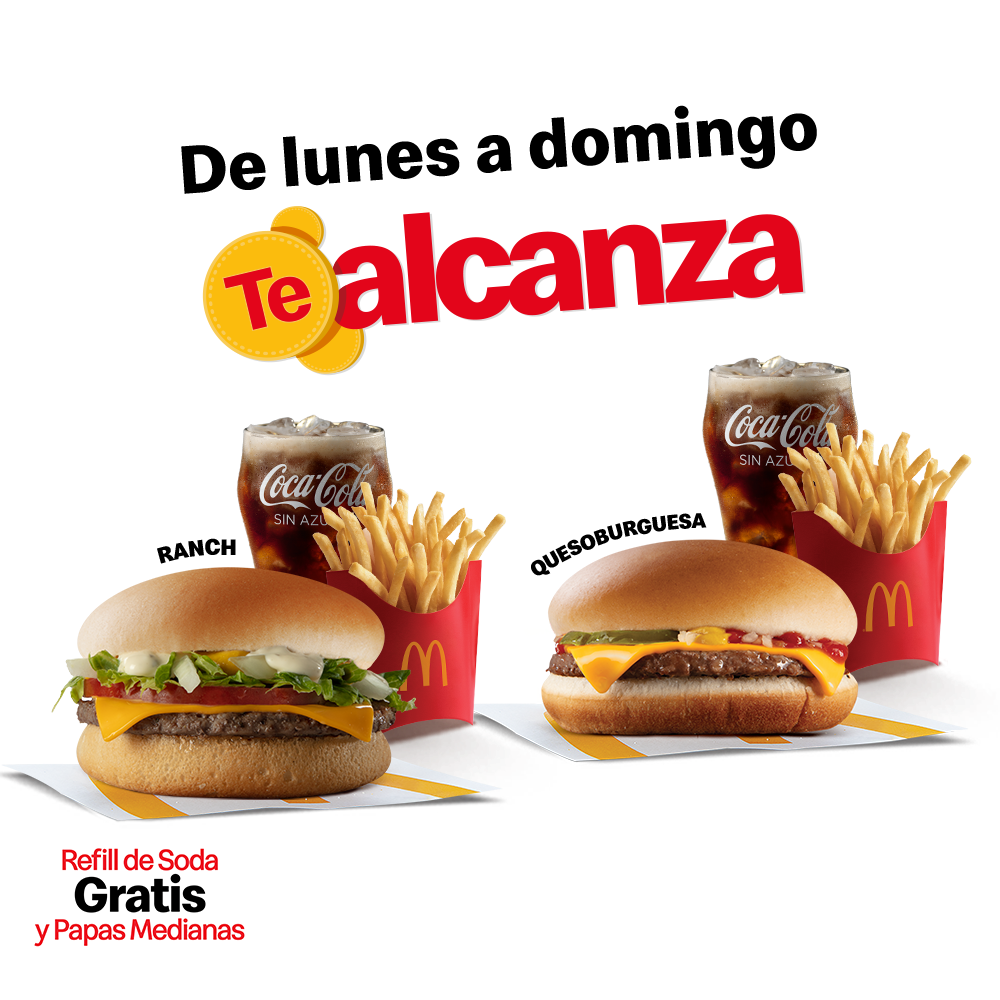
One of my favorite restaurants in San Pedro is “Costa Burgers” where they serve the best American-style burgers. A combo meal there would be $5.50 US dollars, which is cheaper than a regular Big Mac combo for $7.34 in Honduras. Cheaper alternatives can cause McDonald’s to lose a large customer base, so they have to lower these high prices with promotions. In Honduras, McDonald’s has value deals every day to attract customers. They have a separate menu called “Te alcanza” meaning “you have enough.” Customers can choose from six burgers depending on if they want a single, double, or triple patty burger. Each meal comes with free refills and medium fries. These kinds of deals are what help keep McDonald’s as the leading restaurant over its competitors in even the poorest Latin American countries.

Location is an important factor when establishing restaurants in Latin America. To ensure that their business is effective, they have to consider their target audience, foot traffic, and economic factors. This response can be more complicated in Honduras, where most natives are limited financially. More than 57.7 percent of people in San Pedro Sula experience poverty, especially in rural areas and can earn as little as $6.85 per day (“Overview”). This is even below the minimum wage in Louisiana. Hence, it is certainly not enough to buy McDonald’s regularly and have enough left over for bills. Therefore, most people avoid buying fast food except on special occasions. McDonald’s directs its attention mostly toward the suburbs. “‘Because they are considered to be “upscale restaurants” catering to Guayaquil’s middle class, all of the American fast food chains can be found in the suburbs…Each of the suburban locations, which were all free-standing buildings, also had an Auto-Mac (drive-through), a detached McDonald’s sign with arches, and a full-sized Ronald McDonald sitting at the exterior of the restaurant”’ (Oldakowski, Ray, et al., 37). McDonald’s tries to upsell their food to these areas by making it vibrant and modern. This way, they can appeal to high-end customers, who are willing to spend more money in a place that seems luxurious. They effectively erase their image as a children’s restaurant while remaining family-orientated. As a result, it creates a broader appeal among a more diverse consumer base. Below are pictures of the inside of a McDonald’s in Tegucigalpa, Honduras. This restaurant has a very upscale display of their desserts where the coffee and pastries are served in ceramic tableware. These factors influence people to spend their money at McDonald’s instead of competitor restaurants.


The golden arches of McDonald’s will forever remain an important part of history. Their ability and determination to adapt to different cultures embrace their values of diversity and inclusion. This message is shared amongst its customers and employees to promote a positive workplace culture. Their family-friendly environment can bring families and communities together by creating a safe space. Although not everyone in Latin America can afford McDonald’s, they have made valuable efforts to make their menu affordable. As a Honduran woman, I can confidently say McDonald’s has made me feel like a valued customer. They have shown tremendous support for the Hispanic community and minorities overall. Their willingness to show cultural appreciation has helped uplift many communities and underprivileged students.
Works Cited
“An Art and Urban Music Experience.” Ritmo y Color, ritmoycolormcd.com/. Accessed 4 Dec. 2023.
Brown, Abram. “How Hip-Hop Superstar Travis Scott Has Become Corporate America’s Brand Whisperer.” Forbes, Forbes Magazine, 1 Dec. 2020, http://www.forbes.com/sites/abrambrown/2020/11/30/how-hip-hop-superstar-travis-scott-has-become-corporate-americas-brand-whisperer/?sh=3598569a74e7.
Blshaul. “McDonald’s Celebrates Latinx Culture with AR Experience.” Adweek, Adweek, 5 July 2023, http://www.adweek.com/brand-marketing/mcdonalds-ritmo-y-color/.
Chatelain, Marcia “The Miracle of the Golden Arches: Race and Fast Food in Los Angeles.” Pacific Historical Review, vol. 85, no. 3, 2016, pp. 325–53. JSTOR, https://www.jstor.org/stable/26419656. Accessed 5 Dec. 2023.
“Customs & Cuisine of Honduras – Together Women Rise.” Together Women Rise –, 9 May 2023, togetherwomenrise.org/customsandcuisine/customs-cuisine-of-honduras/.
“Descubre Nuestro Menú.” Domicilio.Mcdonalds.Com.Hn, domicilio.mcdonalds.com.hn/welcome. Accessed 5 Dec. 2023.
Dodd, Warren, et al. “Factors Associated with Seasonal Food Insecurity among Small-Scale Subsistence Farming Households in Rural Honduras.” MDPI, Multidisciplinary Digital Publishing Institute, 22 Jan. 2020, http://www.mdpi.com/1660-4601/17/3/706.
“In Fast Food, Some See Fast Track.” Los Angeles Times, Los Angeles Times, 12 Mar. 2001, http://www.latimes.com/archives/la-xpm-2001-mar-12-fi-36643-story.html.
Jansen, Hans G. P., et al. “Geography, Livelihoods and Rural Poverty in Honduras: An Empirical Analysis Using an Asset-Based Approach.” Poverty, Inequality and Migration in Latin Amerika, edited by Stephan Klasen and Felicitas Nowak-Lehmann, NED-New edition, Peter Lang AG, 2008, pp. 221–56. JSTOR, http://www.jstor.org/stable/j.ctv9hj9fz.10. Accessed 30 Nov. 2023.
“J Balvin and McDonald’s Team up Once Again to Create ‘Dorado,’ a …” McDonald’s, 19 Nov. 2020, corporate.mcdonalds.com/corpmcd/en-us/our-stories/article/OurStories.Jbalvin_dorado.html.
John, Emilie St. “McDonald’s Celebrates Hispanic Heritage Month with Millennial Lotería Collab.” 2UrbanGirls, 10 Oct. 2023, 2urbangirls.com/2023/10/mcdonalds-celebrates-hispanic-heritage-month-with-millennial-loteria-collab/.
Lisa R. Young, and Marion Nestle. “Portion Sizes and Obesity: Responses of Fast-Food Companies.” Journal of Public Health Policy, vol. 28, no. 2, 2007, pp. 238–48. JSTOR, http://www.jstor.org/stable/4498959. Accessed 2 Dec. 2023.
“McDonald’s TV Spot, ‘Hacer Más: Katya Echazarreta.’” iSpot.Tv | Realtime TV Advertising Performance Measurement, http://www.ispot.tv/ad/2a8m/mcdonalds-hacer-ms-katya-echazarreta-spanish. Accessed 4 Dec. 2023.
“McDonald’s ‘First Drive’ Tv Commercial.” YouTube, YouTube, 1 Mar. 2019, http://www.youtube.com/watch?v=IILCWIg4L1U.
“McDonald’s International Strategy: Adapting around the World.” Day Translations Blog, Day Translations, 28 Nov. 2023, http://www.daytranslations.com/blog/mcdonalds-international-strategy-adapting-around-the-world/.
“McDonald’s ‘Tio Roberto’ Brand TV Commercial 60s.” YouTube, YouTube, 1 Oct. 2018, http://www.youtube.com/watch?v=a1dQCQoaOgE.
Oldakowski, Ray, and John McEwen. “The Diffusion of American Fast Food to Ecuador.” Material Culture, vol. 42, no. 2, 2010, pp. 28–49. JSTOR, http://www.jstor.org/stable/29764580. Accessed 5 Dec. 2023.
Orozco, Manuel, and Marcela Valdivia. Educational Challenges in Honduras – the Dialogue, Feb. 2017, http://www.thedialogue.org/wp-content/uploads/2017/03/Educational-Challenges-in-Honduras-FINAL.pdf.
“Overview.” World Bank, 4 Oct. 2023, http://www.worldbank.org/en/country/honduras/overview.
“Te Alcanza.” McDonald’s Honduras, mcdonalds.com.hn/promociones-y-apps/tealcanza. Accessed 4 Dec. 2023.
Vekich, Libby. Honduras: Efforts to End Hunger – World Food Prize, http://www.worldfoodprize.org/documents/filelibrary/youth_programs/2019_gyi_papers/VekichLibby_D72A46EAF33FA.pdf. Accessed 5 Dec. 2023.
“Where We Operate.” McDonald’s, corporate.mcdonalds.com/corpmcd/our-company/where-we-operate.html. Accessed 4 Dec. 2023.
 digital Humanities studio
2 thoughts