When looking into the past of cooking and recipes it is quickly noticeable the difference in ingredients. The quality, regulation, and scientific knowledge of these ingredients has quickly evolved to a point where it almost seems archaic looking back a mere century. What Mrs. Fisher Knows about Southern Cooking? Was a cookbook written by a former slave woman published in 1881, detailing her recipes for pickles, soups, pie etc. The Cream Apple Pie recipe has three parts with a total of roughly ten ingredients and takes about an hour and a half to complete. Compared to an apple pie recipe by Pillsbury dough boy that has 7 ingredients just in the filling and takes about 3 hours to complete and comes with a pre-made crust. Even the simple ingredients like apples and everyday dairy products are almost unrecognizable by today’s standards.
Apples
Apples in the 19th century were famously known for unique flavors, shapes, and textures, but today, Americans tend to pick from two different types: “red” apples and “green” apples. The wide variety of apples has not vanished from Earth, but there is apparent favoritism for these two types of apples. From a market standpoint, the red apple is considered the “sweetest” and green the “tartest,” meaning that having these two as the most common options allows the grocery stores to reach both tastes without taking up a ton of space for other apples. Why has the competition in the market chased the wide variety of apples out of the grocery store? Industrial agriculture has caused commercial extinction for many apple varieties, but not global extinction. Many groups are grafting and breeding less common apple varieties back into the local markets, but due to the consumer culture, it is unlikely to make its way into global markets.
The domestication of apple trees is not a very clear process, but they have made a fascinating evolutionary journey that reaches back to ancient megafauna. The seeds spread to new areas by this megafauna eating the apples and then traveling, depositing the seeds in different regions and allowing for a hybrid variety to form. Many fruiting plants in the apple family, “Rosaceae,” have small fruits like raspberries and roses, however, certain trees in the family have evolved to be too large for birds. Scientific evidence suggests that larger fruits are an evolutionary adaptation to attract larger animals that can travel longer distances to spread the seeds further. (Science Daily)
Apple breeding methods have also played a major role in the history of the domestication of apple trees. Apple trees are “self-incompatible,” meaning that offspring grown from a seed frequently do not resemble the mother tree. “The introduction of vegetative propagation by grafting,” (Cornille) helped to relieve some stress of early farmers. Grafting apple slices into saplings is not a new process either. Thomas Jefferson had a reputation for his specific taste in apples and meticulously planned, well-tended orchards that were “ultimately a statement of refinement” (Apples & People). These grafted trees required more care than seedlings and were more expensive. Seedling trees raised from pips grew messy and haphazard, leading to a socio-political battle between the trees. The seedlings often offered a chance for “American seedlings,” creating plenty of new apple varieties. In a more socio-political sense, seedlings stood for the unambitious and lazy, while grafted trees stood for high standards.
Pasteurization
The technical ability to cook in the 19th century is something to be amazed by. The dangers of preparing the meal made savoring the meal much sweeter, but what about the risk of eating the food? Many raw dairy products have the potential to spread diseases like salmonella if ingested improperly. Pasteurization is a heat-treatment process to eliminate the pathogenic microorganisms that cause the diseases, but it was not a standard practice until the 20th century.
The FDA advises that when dealing with unpasteurized eggs, keep them refrigerated, cook until the egg is firm, and cook thoroughly when used in a recipe (FDA) to avoid illness. Without the knowledge of the health risks of eggs, farmers sold and consumers bought the eggs free of worry. The lack of concern was unknowingly validated by how the eggs were typically used in recipes and meals. The process of pasteurization of eggs requires a lower temperature than cooking them. People were “accidentally” pasteurizing the eggs when they cooked and ate them, but what about recipes with raw eggs?
The way Mrs. Fisher uses eggs in her Cream Apple Pie is a testament to the science behind cooking, even in the 19th century. The topping consists of three ingredients: fresh cream, vanilla, and egg whites, to make something that can only be described as the ancestor of whipped cream. Eggs do many things in cooking. They can leaven, emulsify, thicken, bind, coat and seal, or color and shine. (get cracking.) The binding may be related to the egg’s ability to coagulate and form gels to hold ingredients together. Mrs. Fisher’s recipe asked to beat the egg whites. When the egg whites were beaten, the oxygen was trapped and incorporated into the proteins to form an “elastic web” that encases air bubbles, providing volume and structure. As the proteins set the eggs bind ingredients together and give strength and stability to baked goods.
Egg whites are 90% water, and the other 10% is a range of proteins. One of the proteins, conalbumin, is a binding agent in the proteins of the egg white. A more important protein is ovomucin, which helps thicken the egg white and give it a gloopy consistency. (Compound interest). Most of the proteins in the egg whites act as a binding or gelling agent, which then breaks down and traps air when beat.
The introduction of pasteurization didn’t only change the game for eggs but for all dairy products. The fresh cream in the topping was a different product in her time. Flash pasteurization is the standard for milk and cream products. Flash pasteurization is a process used for pourable products that involves high temperature for a short three to fifteen seconds. (USDA). Flash-pasteurization causes a “slight decrease in the proportion of fat present,” in cream. (Cambridge). Fresh cream today has a fat content of <25%, but for a whipped topping, the cream must have more than 30%. (the kitchen). The fresh cream Mrs. Fisher had a higher fat content than we are used to unless the eggs acted as a miraculous binding agent with no fat to bind.
Cooking the Pie Today
Originally, I had planned to bake the pie for Thanksgiving dinner as one of the desserts on the table to get a group opinion. However, I realized that this pie recipe was more than likely a dish to celebrate with, and the week I decided to bake the pie was the week of my best friend’s birthday. To keep the spirit of celebration in the pie, we decided that for her birthday we would bake a 19th-century apple pie all from scratch.
We started with the filling since it needed to be completely cool before baking. The first step was deciding on an apple since there is a large variety, and Mrs. Fisher left the recipe at two pounds of “the best of apples.” We kept it simple and did a Granny Smith, thinking tartness would work great with the cream on the top. After peeling and chopping them, we steamed the apples. One thing that has stayed consistent since the 19th century is the method of steaming: a pot of water under a colander/strainer. We almost made a mush because we steamed them for too long, but we aimed for five minutes. After that, we transferred the apples into another container and put cinnamon and sugar on top to taste, and the filling was complete.
The other base for the pie was the crust from scratch. It was the most entertaining part of the whole experience. The crust was made of flour, salt, solid butter, and lard kneaded together to form a dough. We sifted a pound of flour and a pinch of salt together, then added the cup of butter and lard. Mrs. Fisher said it should take no longer than ten minutes to prepare the crust, and we managed to do it in about that time. We rolled the dough out “paper thin” using a coffee cup because we didn’t have a pin roller. We played the crust on the pie tin, filled it with the filling, cooked it at 350 degrees, and checked to see if it was finished after twenty minutes, then again every ten minutes.

The topping was the most annoying and challenging part of the pie recipe. We used heavy cream instead of fresh to make up for the fat content difference, with vanilla and egg whites to make the topping. We beat the egg whites for almost forty minutes to get it to form a foamy consistency, then added it to the cream. We beat the cream a little before we added the egg whites, but the topping only formed a soupy consistency. My theory is that we beat the eggs too much, or the cream too little before adding them. It could be that we didn’t beat them enough when they were mixed. Even though we failed to make the cream into a cream texture, we still used it.
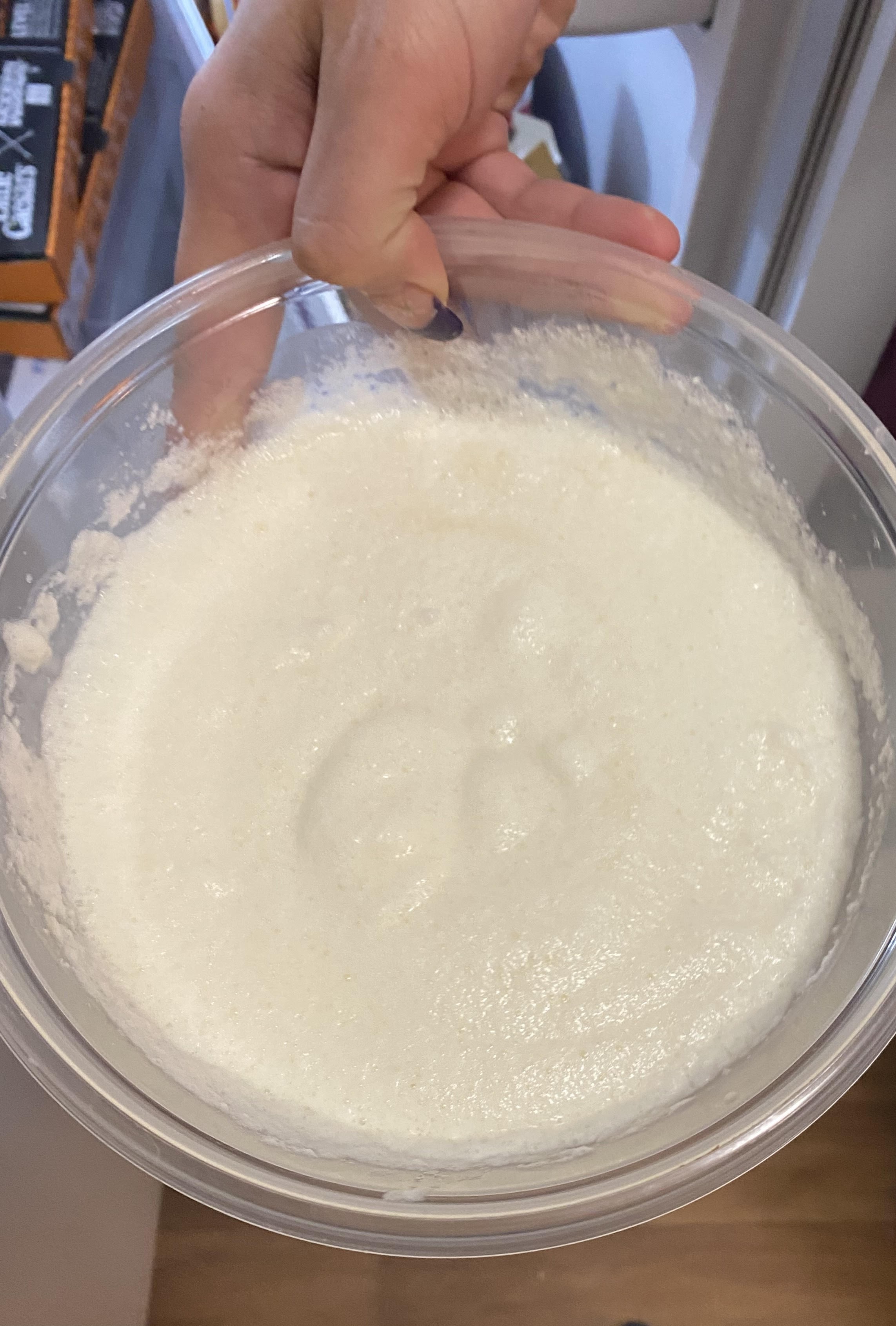
The final product was a shockingly dry pie, even with the soupy topping. It tasted like an apple pie by today’s standards, but the crust was crumbled dry, and the filling had no liquid, only apples and the little water left over after steaming. Even with the slightly disappointing texture, the celebration aspect of baking the pie together was an amazing experience. Working together to create a product of hard work and love to enjoy as a celebration of life demonstrated the kitchen as the heart of the home, even in the 19th century.

Bibliography:
Max Planck Institute for the Science of Human History. “Exploring the origins of the apple.” ScienceDaily. ScienceDaily, 27 May 2019. Exploring the origins of the apple | ScienceDaily
Apples&People. “Apples for the Wealthy.” 30, January 2023. Apples for the Wealthy – Apples and People
Carnille, Amandine, et al. “The Domestication and Evolutionary Ecology of Apples: Trends in Genetics.” Cell, 29 Nov. 2013.The domestication and evolutionary ecology of apples: Trends in Genetics (cell.com)
“Food Science.” Eggs. ca, Food Science | Get Cracking (eggs.ca) Accessed 2 Dec. 2023.
“The Chemistry of Eggs & Egg Shells.” Compound Interest, 26 Mar. 2016, Compound Interest: The Chemistry of Eggs & Egg Shells (compoundchem.com) Accessed 2 Dec. 2023
Dolby, R.M. “513. The Effect of Different Cream Treatments during the Pasteurization process of the Size Distribution of Fat Globule in Cream and Butter.” Journal of Dairy Research, vol. 20, no. 2, June 1953, pp. 201-211, 513. The effect of different cream treatments during the pasteurization process on the size distribution of fat globules in cream and butter | Journal of Dairy Research | Cambridge Core Accessed 2 Dec. 2023.
“AskUSDA.” Usda.gov, 2023, What is “flash pasteurization?” (usda.gov) Accessed 2 Dec. 2023.
“What’s the Difference between Half-And-Half, Light Cream, Whipping Cream, and Heavy Cream?” Kitchn, Heavy Cream vs. Whipping Cream vs. Light Cream vs. Half & Half | The Kitchn
 digital Humanities studio